Homemade Lasagna Noodles Recipe – Fresh Pasta Sheets
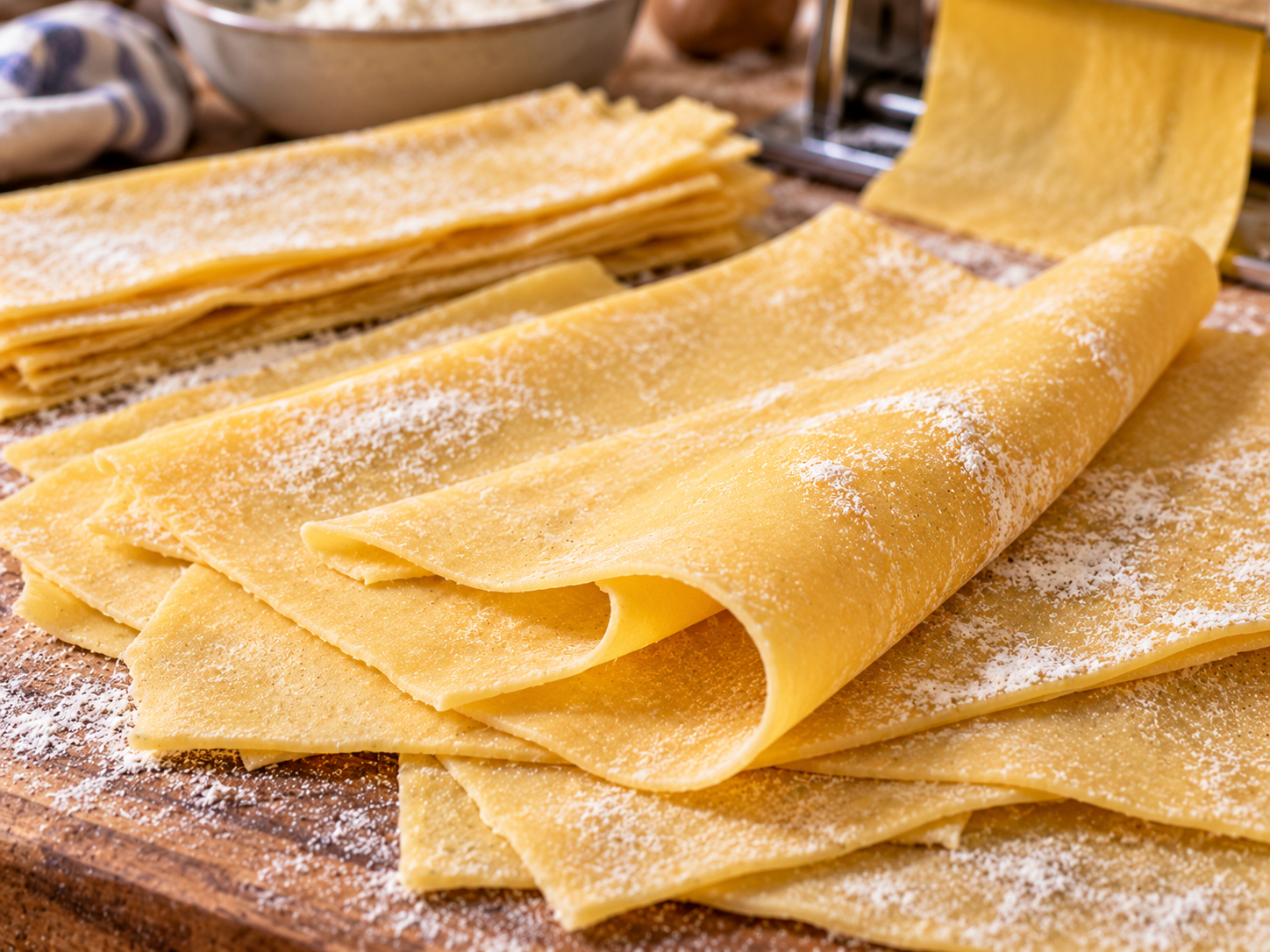
Fresh lasagna noodles come from a short list of ingredients — flour, eggs, and salt — and a process that’s more about patience than skill. There’s no special equipment required beyond a pasta machine, and the dough itself comes together the same way most egg pasta does: mixed, kneaded until smooth, and rested before it’s rolled thin.
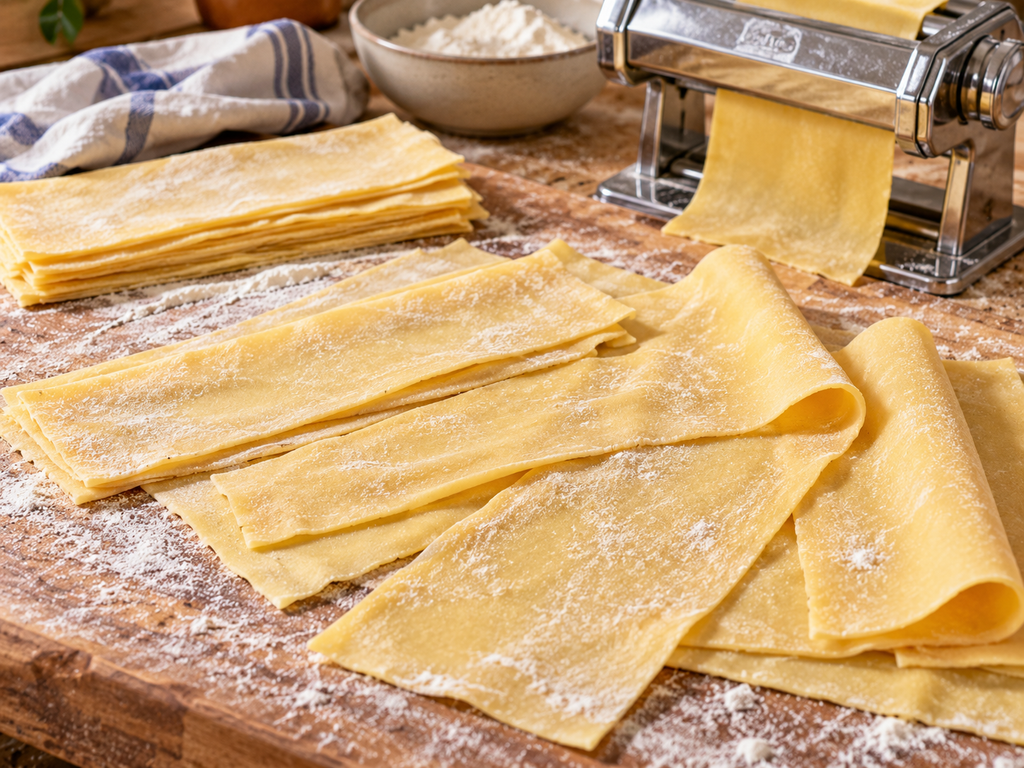
Lasagna Noodles
The eggs and flour form a dough that’s firm enough to roll through progressively thinner settings without falling apart, which is exactly what lasagna sheets need to hold together through cutting, blanching, and baking. Salt rounds out the flavor, but it’s really the ratio of egg to flour that gives this dough its structure.
The part that matters most is resting the dough before rolling it, then taking it down through the pasta machine’s settings gradually rather than trying to get to a thin sheet in one or two passes. Dough that hasn’t rested fights back when you try to roll it thin, and sheets rolled too quickly are far more likely to tear than ones brought down gradually.
What You Need to Make Fresh Lasagna Noodles
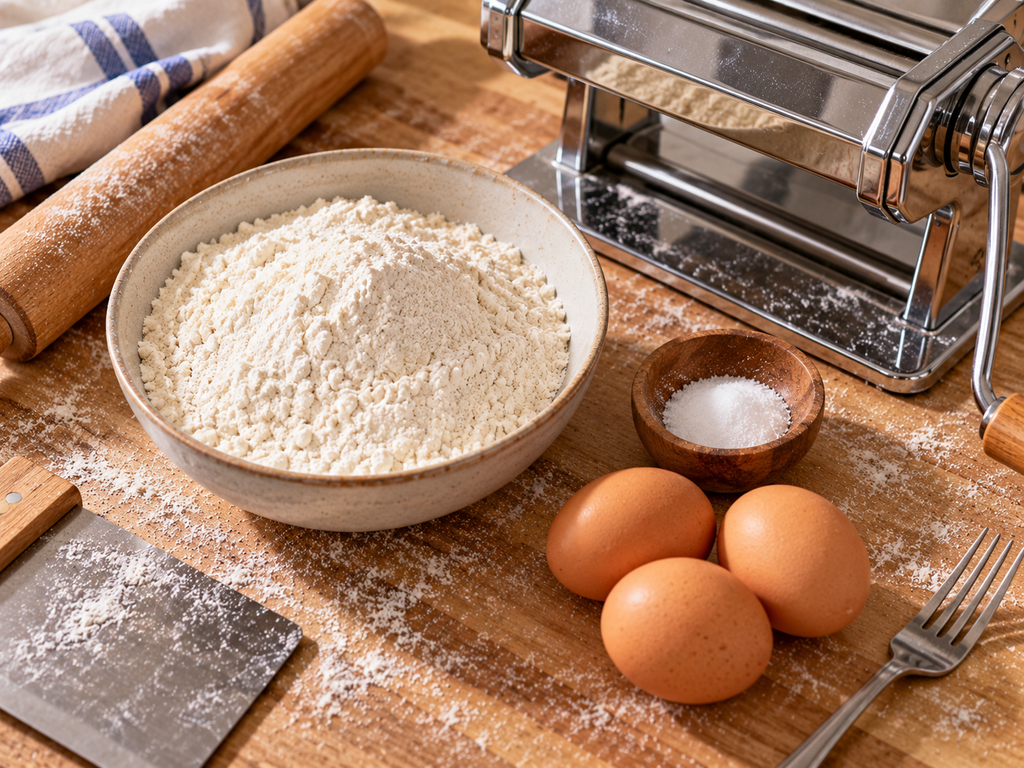
- 300 grams (about 2 1/2 cups) all-purpose flour, plus more for dusting
- 3 large eggs
- 1/2 teaspoon fine salt
Equipment: large work surface or large mixing bowl, fork, bench scraper, plastic wrap, pasta machine or pasta roller, sharp knife or pasta cutter, large pot, large bowl for ice water, clean kitchen towels or parchment paper, large slotted spoon or tongs.
A few notes on ingredients:
- Flour: All-purpose flour is what this recipe is built around — there’s no need for a specialty pasta flour or semolina here.
- Eggs: Three large eggs provide both the liquid and the structure for this dough. There’s no water added separately; the eggs alone bring the flour together.
- Salt: A modest amount, mixed into the flour rather than the eggs, seasons the dough without affecting how it comes together.
How to Make Lasagna Noodles From Scratch
Step 1: Make the dough
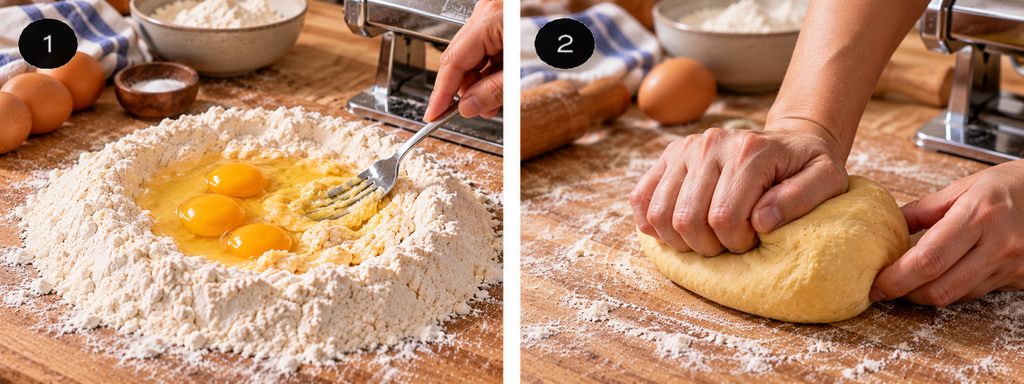
Place the flour on a clean work surface and make a wide well in the center. Crack the eggs into the well and sprinkle the salt around the flour. Use a fork to gradually whisk the eggs, pulling flour in from the sides until a shaggy dough begins to form.
Step 2: Knead the dough
Use your hands to bring the dough together, then knead for about 8 to 10 minutes until it becomes smooth and elastic. If the dough feels very sticky, dust the work surface with a small amount of flour. If it feels unusually dry and will not come together, dampen your hands with a little water and continue kneading rather than adding a large amount of liquid.
Step 3: Rest the dough
Shape the dough into a ball and wrap it tightly in plastic wrap. Let it rest at room temperature for at least 30 minutes. Resting allows the gluten to relax so the dough becomes easier to roll.
Step 4: Divide and roll
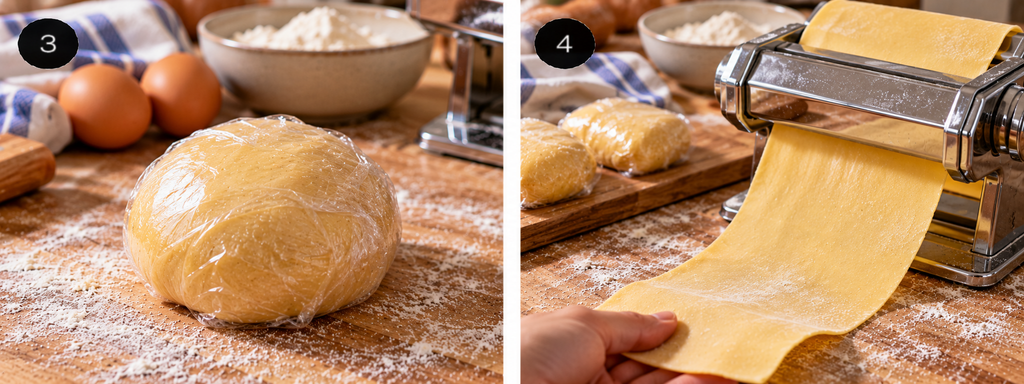
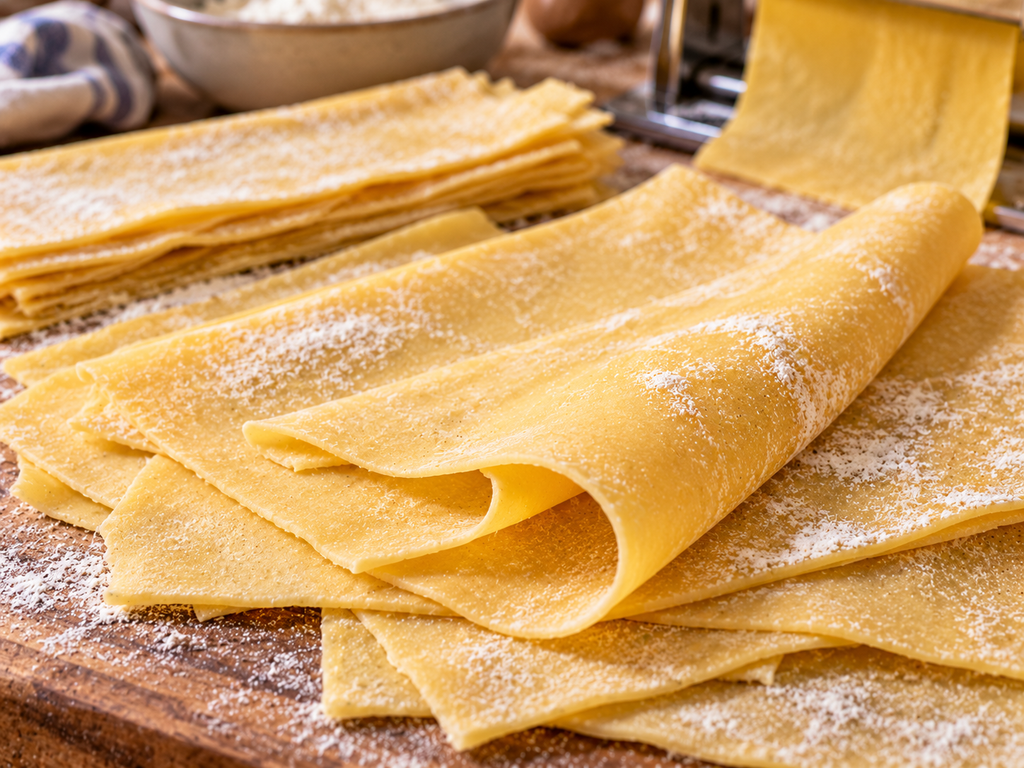
Unwrap the dough and divide it into 4 equal pieces. Keep the pieces you are not working with covered. Flatten one piece and dust it lightly with flour. Run it through the pasta machine on its widest setting, fold it in half, and run it through again. Continue rolling the dough through progressively thinner settings until the sheet is about 1/16-inch thick and flexible enough to see light through.
Step 5: Cut the lasagna sheets
Lay the rolled pasta sheet on a lightly floured surface and cut it into pieces that fit your baking dish. Aim for about 3 sheets per layer in a standard 9×13-inch lasagna. Repeat with the remaining dough.
Step 6: Blanch the noodles
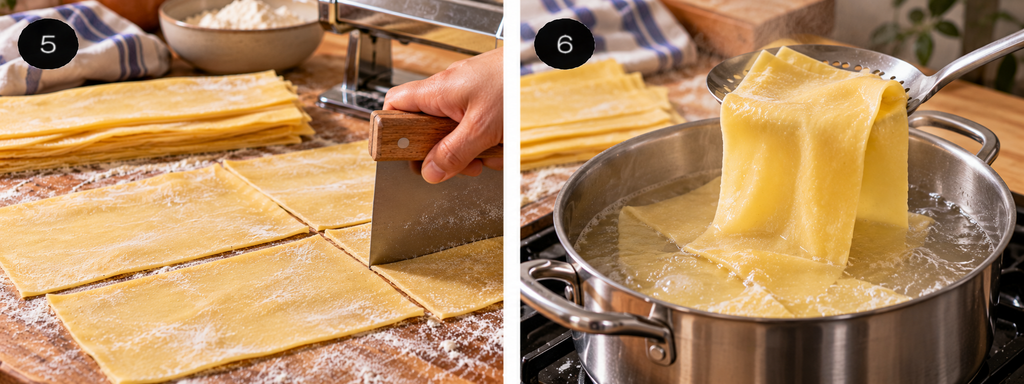
Bring a large pot of salted water to a boil. Working with a few sheets at a time, blanch the fresh noodles for about 30 to 60 seconds, just until they become flexible. Transfer them immediately to a bowl of ice water.
Step 7: Drain and prepare for lasagna
Remove the noodles from the ice water and lay them in a single layer on clean kitchen towels or parchment paper. Pat gently to remove excess moisture. Use the noodles immediately in your lasagna or keep them separated until ready to assemble.
Tips for Rolling Fresh Pasta
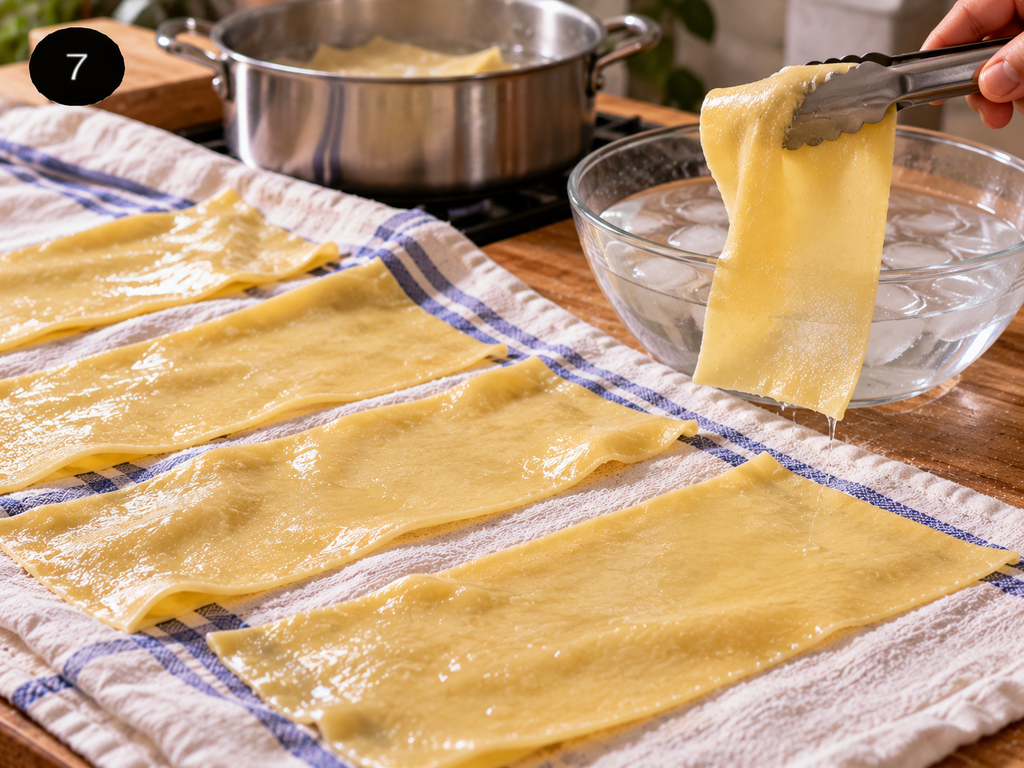
- Fold and re-roll on the widest setting before narrowing it. Running the dough through the widest setting, folding it in half, and repeating a couple of times before moving to narrower settings helps even out the dough’s texture and makes the later, thinner passes go more smoothly.
- Lift and reposition the sheet as it comes through the machine. A long sheet that’s left to sit can stick to the work surface; lifting it periodically and letting it drape loosely keeps it from sticking before you’re ready to cut it.
- Flour lightly, but often, rather than heavily all at once. A light dusting whenever the dough starts to feel tacky keeps it from sticking to the rollers without building up a thick, dry coating on the surface.
- Keep unused dough pieces covered while you work. Dough left uncovered on the counter starts to dry out at the edges fast, which makes it harder to roll evenly once you get to it.
Frequently Asked Questions
Do you have to boil fresh lasagna noodles?
For this recipe, yes — briefly. The noodles get blanched for about 30 to 60 seconds, just until they turn flexible, rather than fully cooked through. That short blanch softens the fresh pasta enough to layer easily and keeps it from staying too firm once it goes into the oven with the rest of the lasagna.
How thin should homemade lasagna noodles be?
Aim for about 1/16 inch — thin enough that you can see light through the sheet when you hold it up. Noodles rolled thicker than that tend to absorb more liquid from the sauce as the lasagna bakes, which can leave the finished dish drier than intended, on top of simply being harder to layer and bite through cleanly.
Can I make lasagna noodles without a pasta machine?
Yes, though it takes more effort. A rolling pin can get the dough thin enough, working from the center outward and giving the dough a quarter turn periodically so it stays an even thickness throughout. It takes longer and more arm strength to reach the same approximate 1/16-inch thickness a pasta machine gets to in a few passes, but it’s entirely possible.
How do you keep fresh lasagna noodles from sticking together?
Keep them in a single layer rather than stacked once they’re cut and blanched, with a light dusting of flour between sheets if you do need to layer them temporarily. Laying them out on clean kitchen towels or parchment paper, as the recipe does after blanching, gives each sheet room to sit without touching the ones next to it.
Can I make homemade lasagna noodles ahead of time?
Fresh pasta dough and sheets are best used the same day they’re made — left raw in the refrigerator, fresh pasta tends to oxidize and discolor within about a day. If you want to prepare further ahead, freezing the cut sheets works better than refrigerating them: lay them flat on a tray until firm, then layer them with parchment paper in an airtight container or freezer bag.
you can check more recipes from here
Homemade Lasagna Noodles Recipe – Fresh Pasta Sheets
Ingredients
- 300 grams about 2 1/2 cups all-purpose flour, plus more for dusting
- 3 large eggs
- 1/2 teaspoon fine salt
Instructions
- Place the flour on a clean work surface and make a wide well in the center. Crack the eggs into the well and sprinkle the salt around the flour. Use a fork to gradually whisk the eggs, pulling flour in from the sides until a shaggy dough forms.
- Use your hands to bring the dough together, then knead for about 8–10 minutes until smooth and elastic. Add only a small amount of flour if the dough is very sticky.
- Shape the dough into a ball, wrap it tightly in plastic wrap, and let it rest at room temperature for at least 30 minutes.
- Divide the dough into 4 equal pieces. Keep the pieces you are not using covered. Flatten one piece and run it through the pasta machine on its widest setting. Continue rolling through progressively thinner settings until the sheet is about 1/16-inch thick.
- Cut the pasta sheet into pieces that fit your baking dish. Repeat with the remaining dough.
- Bring a large pot of salted water to a boil. Blanch the fresh noodles for about 30–60 seconds, then transfer them immediately to ice water.
- Remove the noodles from the ice water and lay them in a single layer on clean kitchen towels or parchment paper. Pat gently to remove excess moisture and keep the sheets separated until ready to assemble the lasagna.
Notes
- Keep unused dough covered while working with another portion so the surface does not dry out.
- The final sheets should be thin enough to be flexible and slightly translucent but strong enough to handle during layering.