
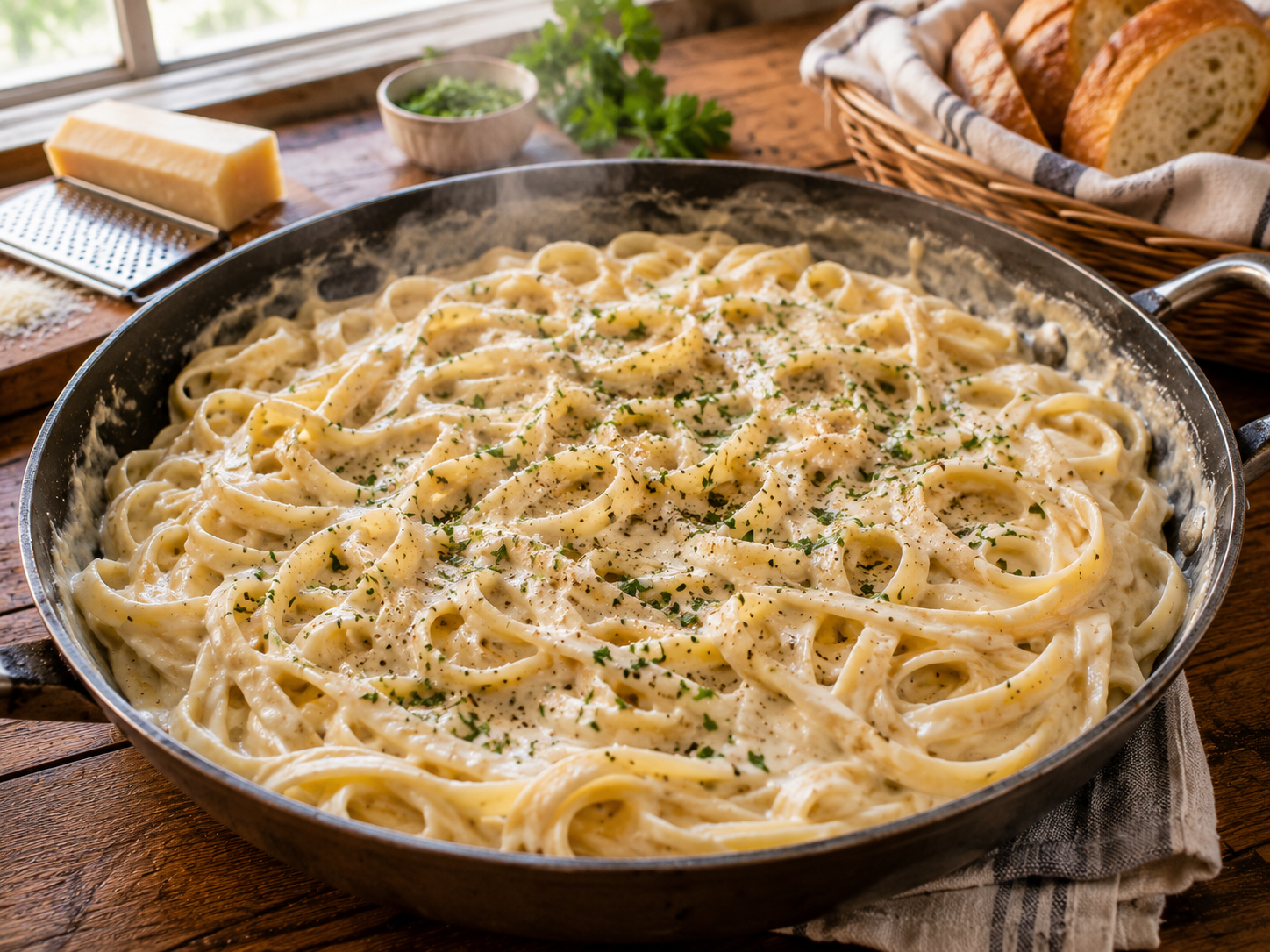
Easy Creamy Fettuccine Alfredo (20-Minute Homemade Dinner!)
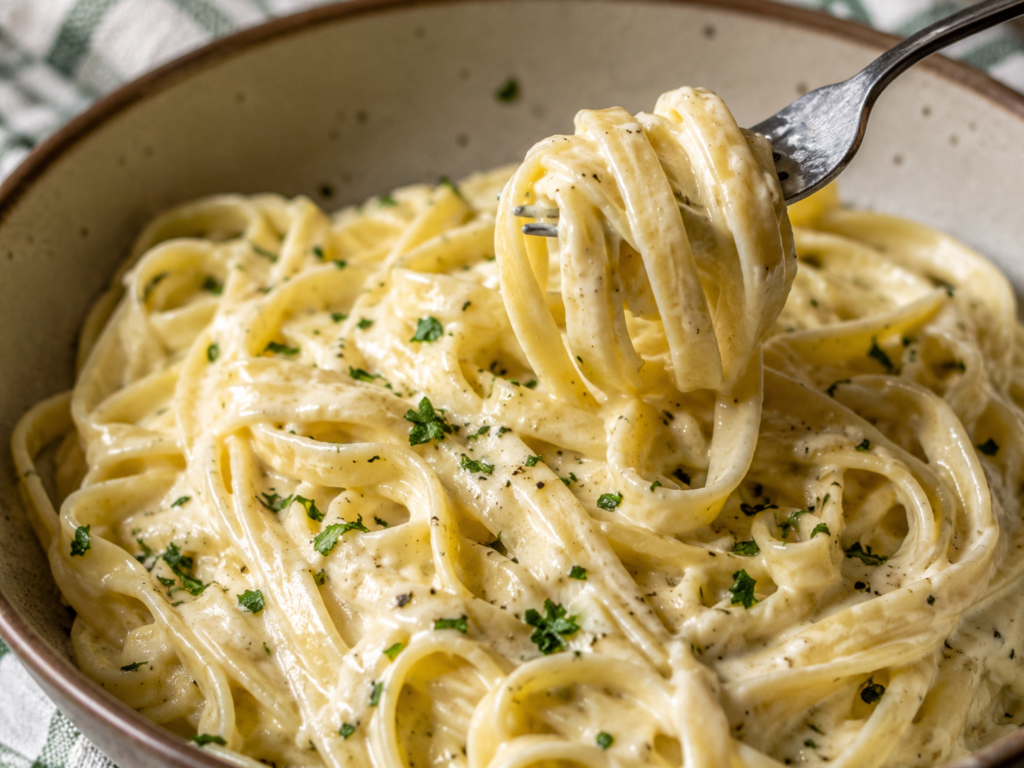
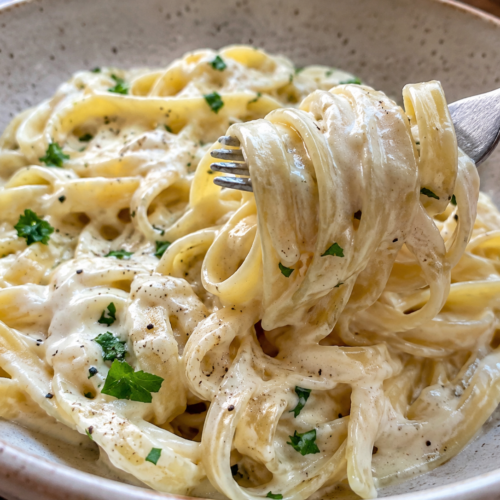
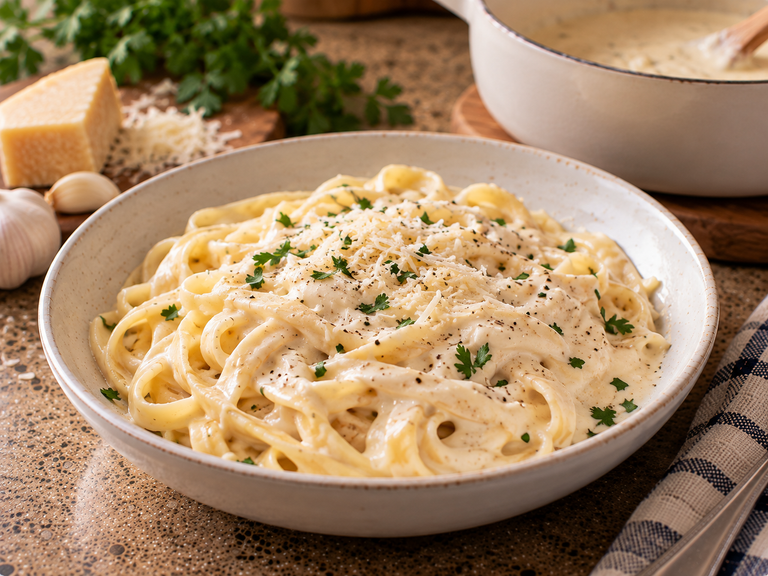
Friends, this fettuccine alfredo is about to replace your favorite Italian restaurant entirely. Silky, rich, deeply cheesy, and genuinely ready in 20 minutes flat.
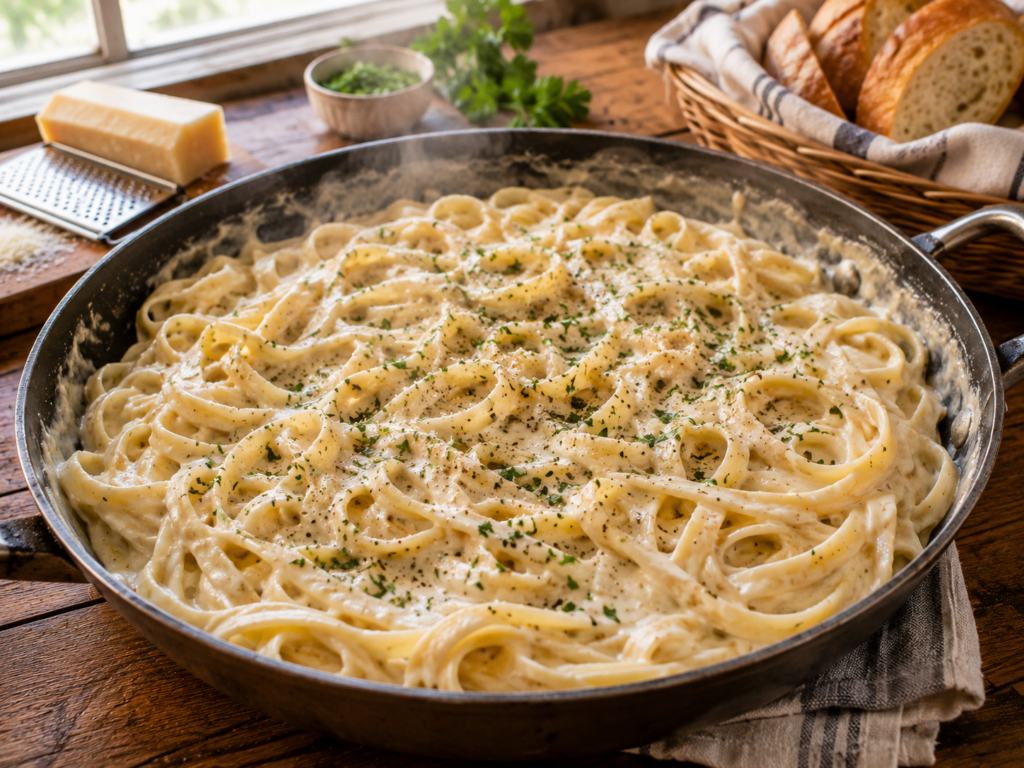
Easy Creamy Fettuccine Alfredo
I used to think a truly great alfredo sauce required restaurant-level skill or some secret ingredient nobody talks about. Turns out it just requires understanding one small but crucial piece of pasta science that most home versions skip.
This easy creamy fettuccine alfredo comes together with just a handful of ingredients, no jarred sauce required, and it tastes noticeably richer and more balanced than anything from a can. Once you understand exactly how the sauce emulsifies, you’ll never go back to store-bought again.
This is genuinely one of the best 20-minute pasta dinner options out there, perfect for busy weeknights or a night when you want something that feels special without much actual effort. No specialty ingredients, no complicated technique, just butter, cream, garlic, and genuinely great parmesan.
Let’s get into exactly why this homemade alfredo sauce comes together so silky smooth every single time.
Why You’ll Love This Recipe & The Silky Sauce Secret
Here’s the science behind genuinely silky fettuccine alfredo: the sauce is an emulsion, meaning fat and liquid are held together in a stable suspension rather than separating into greasy pools. Heavy cream, melted butter, and starchy pasta water all need to combine gently and gradually for that emulsion to hold.
Starchy pasta water is the real unsung hero here. As pasta boils, it releases starch into the cooking water, and that starch acts as a natural emulsifier, helping bind fat and liquid together into a cohesive, glossy sauce rather than a broken, oily mess.
Skip the pasta water, or add your cheese too aggressively over high heat, and you risk the proteins in parmesan seizing up and clumping instead of melting smoothly. Gentle, low heat throughout the entire process is what keeps everything silky rather than grainy or separated, and it’s a small adjustment that makes an enormous difference in the final result.
Freshly grated parmesan matters enormously here too, and it’s not just a preference thing. Pre-shredded, bagged parmesan is coated in anti-caking agents like cellulose, which actively resist melting smoothly and are one of the most common reasons homemade fettuccine alfredo turns grainy instead of silky.
There’s a temperature dimension worth understanding too. Cheese proteins are sensitive to sudden, high heat; introduce them too quickly into a very hot pan, and they seize into tight little clumps rather than melting gradually into the surrounding fat and liquid.
This is exactly why removing the pan from heat before adding parmesan works so reliably. The residual warmth is enough to melt the cheese smoothly, while the absence of direct, active heat prevents that sudden protein-seizing reaction from ever happening in the first place.
Building the sauce directly in the same pan you’ll toss the pasta in, off the heat during the final cheese addition, gives you maximum control over temperature. This is exactly why restaurant-quality fettuccine alfredo relies on technique and timing far more than any secret ingredient.
There’s a helpful mental model here too: think of the sauce as a suspension you’re carefully building rather than something that just happens automatically once ingredients are combined. Every addition, whether it’s cheese or pasta water, needs to be incorporated gradually while the pan stays off direct heat, giving the fats and liquids time to bind together smoothly rather than seizing or separating.
When handling heavy cream and dairy generally, proper food safety matters too, especially around temperature control during storage and reheating; the FDA Safe Dairy Guidelines outline exactly what to keep in mind.
Ingredients You’ll Need for Fettuccine Alfredo
Here’s everything that goes into a genuinely great fettuccine alfredo, and why each ingredient earns its place.
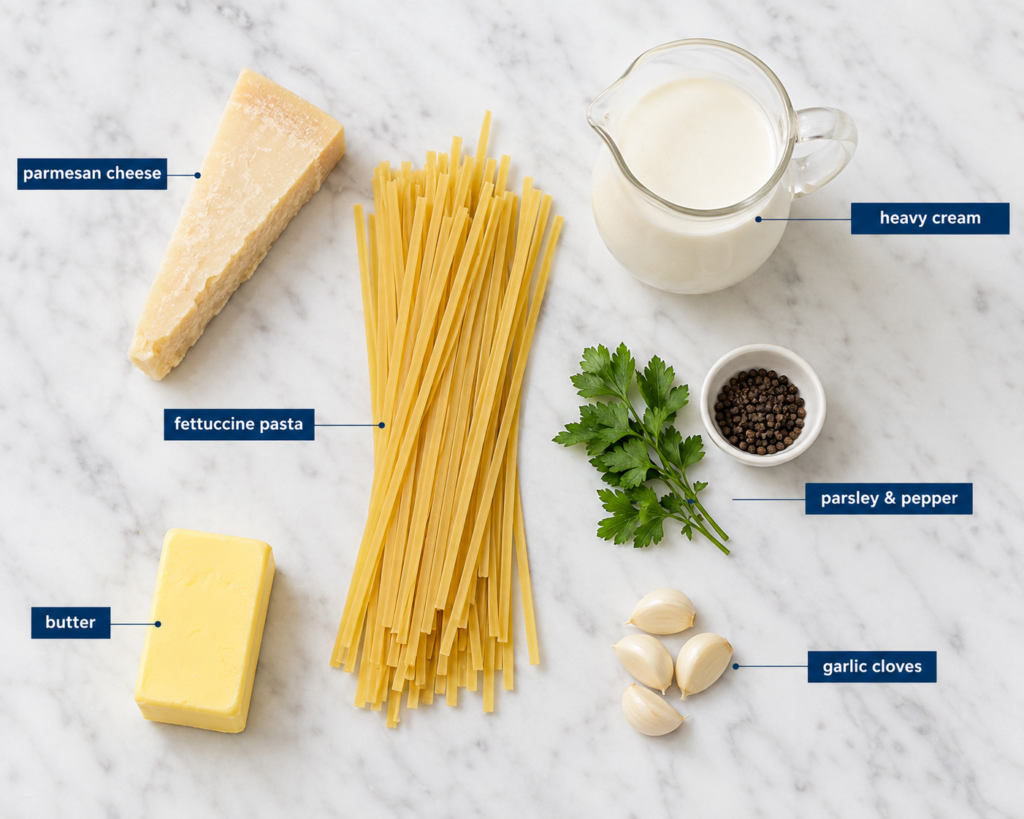
- Dry fettuccine pasta: The classic wide, flat noodle shape that holds this rich sauce beautifully in every bite.
- Heavy whipping cream: The backbone of a genuinely rich fettuccine alfredo sauce, providing the fat content necessary for a stable, silky emulsion.
- Unsalted butter: Used to build the base of the sauce and control your own salt levels, rather than relying on pre-salted butter.
- Freshly grated parmesan cheese: Non-negotiable for a smooth, clump-free sauce; always grate it yourself directly off a block.
- Fresh garlic cloves: Minced fine, adding a warm, aromatic backbone that rounds out the richness of the cream and butter.
- Fresh parsley and black pepper: Parsley adds color and a bright, fresh finish, while black pepper contributes a classic, gentle bite against all that richness. Both are simple additions, but they genuinely round out the final flavor of a good fettuccine alfredo, keeping it from tasting one-dimensionally rich.
How to Make the Best Fettuccine Alfredo Step-by-Step
Here’s exactly how this fettuccine alfredo comes together, from boiling water to glossy, silky finish.
Stage 1: Boiling Pasta Al Dente & Saving Pasta Water. Cook your fettuccine in well-salted boiling water until just al dente, according to package directions. Before draining, reserve at least a cup of that starchy pasta water, since it’s essential for building your sauce’s emulsion later.
Stage 2: Melting Butter and Garlic, Gently Simmering the Cream. In a large skillet over low to medium heat, melt your butter and add minced garlic, cooking just until fragrant without letting it brown. Pour in heavy cream and let it simmer gently, never at a hard boil, for a few minutes until slightly thickened.
Keeping this simmer gentle rather than vigorous matters enormously for the final texture. A hard boil can cause the cream’s fat and water content to separate slightly, working directly against the smooth, cohesive sauce you’re trying to build.
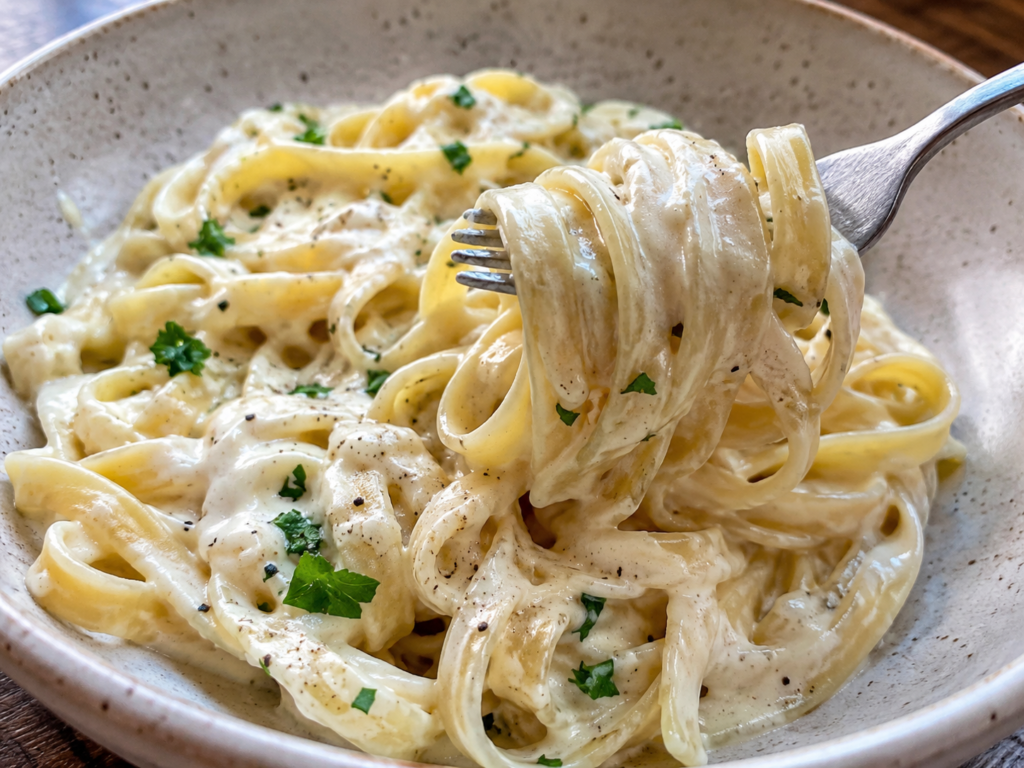
Stage 3: Tossing Pasta with Fresh Parmesan Off the Heat. Remove the skillet from the heat, then add your cooked fettuccine directly into the cream mixture along with a splash of reserved pasta water. Gradually sprinkle in freshly grated parmesan while tossing continuously, adding more pasta water as needed until the sauce turns glossy and coats every strand evenly.
Season with black pepper and a little extra salt if needed, then finish with fresh parsley scattered over the top. Serve your fettuccine alfredo immediately, while it’s still warm, glossy, and at its silkiest, since this sauce is at its absolute best the moment it’s tossed.
Easy Creamy Fettuccine Alfredo
Pro Chef Tips & Troubleshooting
Even a well-practiced fettuccine alfredo can go sideways in a few predictable ways, so here’s how to catch and fix each one fast.
| Problem/Mistake | Why It Happens | How to Fix It |
|---|---|---|
| Sauce breaks or turns oily | Cream boiled too hard, or cheese added over direct high heat | Simmer cream gently and always add cheese off the heat, tossing continuously |
| Clumpy, grainy cheese | Pre-shredded parmesan used instead of freshly grated, or cheese added too quickly | Always grate parmesan fresh off the block and add it gradually while tossing |
| Bland, flat flavor | Under-seasoning, or skipping fresh garlic | Season generously with salt and pepper, and always include fresh garlic for depth |
| Sauce too thick or clumps together as it cools | Not enough starchy pasta water reserved or added | Reserve a full cup of pasta water and add it gradually to loosen the sauce as needed |
| Pasta turns mushy | Fettuccine boiled past al dente before being tossed with sauce | Cook pasta just to al dente, since it will continue absorbing sauce once combined |
| Garlic tastes bitter | Garlic browned or burned while cooking in the butter | Cook garlic gently just until fragrant, never letting it brown |
A quick note on ingredient swaps: while this recipe sticks to a strict, classic ingredient list, some cooks like to add a squeeze of fresh lemon juice at the very end to brighten the richness. It’s optional, but a small splash genuinely helps balance an otherwise heavy dish without changing the character of a traditional fettuccine alfredo.
What to Serve With Creamy Fettuccine Alfredo
Round out your fettuccine alfredo dinner with a protein or a fresh side to balance all that richness.
- Garlic bread: Perfect for mopping up any extra silky sauce left on the plate.
- Roasted asparagus: A simple, slightly charred vegetable side that lightens up the richness of the dish.
- Grilled chicken: Looking for a juicy protein to pair with this pasta? Try serving it alongside our ultra-tender Easy Homemade Chicken Parmesan!
- A beefy alternative: Want a quick beef option instead? Check out our 15-minute Garlic Butter Steak Bites.
Any of these pairings work beautifully, since fettuccine alfredo is rich enough to stand as the centerpiece while still leaving room for a simple protein or vegetable alongside it.
Frequently Asked Questions (FAQ)
These are the questions people ask most often when making great fettuccine alfredo at home.
Can I use milk or half-and-half instead of heavy cream?
You can, though the sauce will be noticeably thinner and less rich, since heavy cream’s higher fat content is what creates a stable, silky emulsion for genuinely great fettuccine alfredo. If using half-and-half, expect to need a bit more parmesan and pasta water to help thicken and bind the sauce properly.
Why did my alfredo sauce separate and become oily?
This almost always happens when the cream is boiled too hard or the cheese is added over direct high heat, causing the fat to separate from the liquid. Always simmer gently and add cheese off the heat, tossing continuously to maintain a stable emulsion throughout your fettuccine alfredo.
Can I make fettuccine alfredo ahead of time?
This dish is genuinely best made fresh, since the sauce can thicken and separate slightly upon reheating. If you must prep ahead, slightly undercook the pasta and store the sauce separately, then combine and gently reheat together just before serving.
How do I properly reheat leftover alfredo pasta?
Reheat gently in a skillet over low heat with a splash of extra cream or reserved pasta water, stirring frequently to bring the sauce back together. Avoid the microwave if possible, since its uneven heat tends to cause the sauce to separate and turn grainy.
Do I really need to use freshly grated parmesan cheese?
Yes, this is genuinely essential for a smooth, clump-free fettuccine alfredo, since pre-shredded parmesan contains anti-caking agents that resist melting properly. Grating it fresh off the block takes just a minute and makes a significant difference in the final texture of your homemade alfredo sauce.
you can check more recipes from here
Easy Creamy Fettuccine Alfredo (20-Minute Homemade Dinner!)
Ingredients
- 12 oz dry fettuccine pasta
- 1.5 cups heavy whipping cream
- 4 tbsp unsalted butter
- 1.5 cups freshly grated parmesan cheese
- 3 cloves garlic minced
- 2 tbsp fresh parsley chopped
- 1/2 tsp black pepper plus more to taste
- Salt to taste
Instructions
- Boil fettuccine in well-salted water until al dente, reserving 1 cup of pasta water before draining.
- Melt butter with garlic in a large skillet over low-medium heat until fragrant.
- Pour in heavy cream and simmer gently for a few minutes until slightly thickened.
- Remove from heat, add cooked fettuccine and a splash of pasta water, tossing to combine.
- Gradually sprinkle in freshly grated parmesan while tossing, adding more pasta water as needed for a silky sauce.
- Season with black pepper and salt, garnish with fresh parsley, and serve immediately.
Notes
- Never buy pre-shredded parmesan; grate it fresh off the block for a smooth, clump-free sauce.
- Always save at least 1 cup of starchy pasta water before draining, since it’s essential for the sauce’s emulsion.
- Add cheese only off the heat, tossing continuously, to prevent the sauce from breaking or turning oily.
One Comment