Easy Homemade Creamy Tomato Soup (Best 30-Min Recipe!)
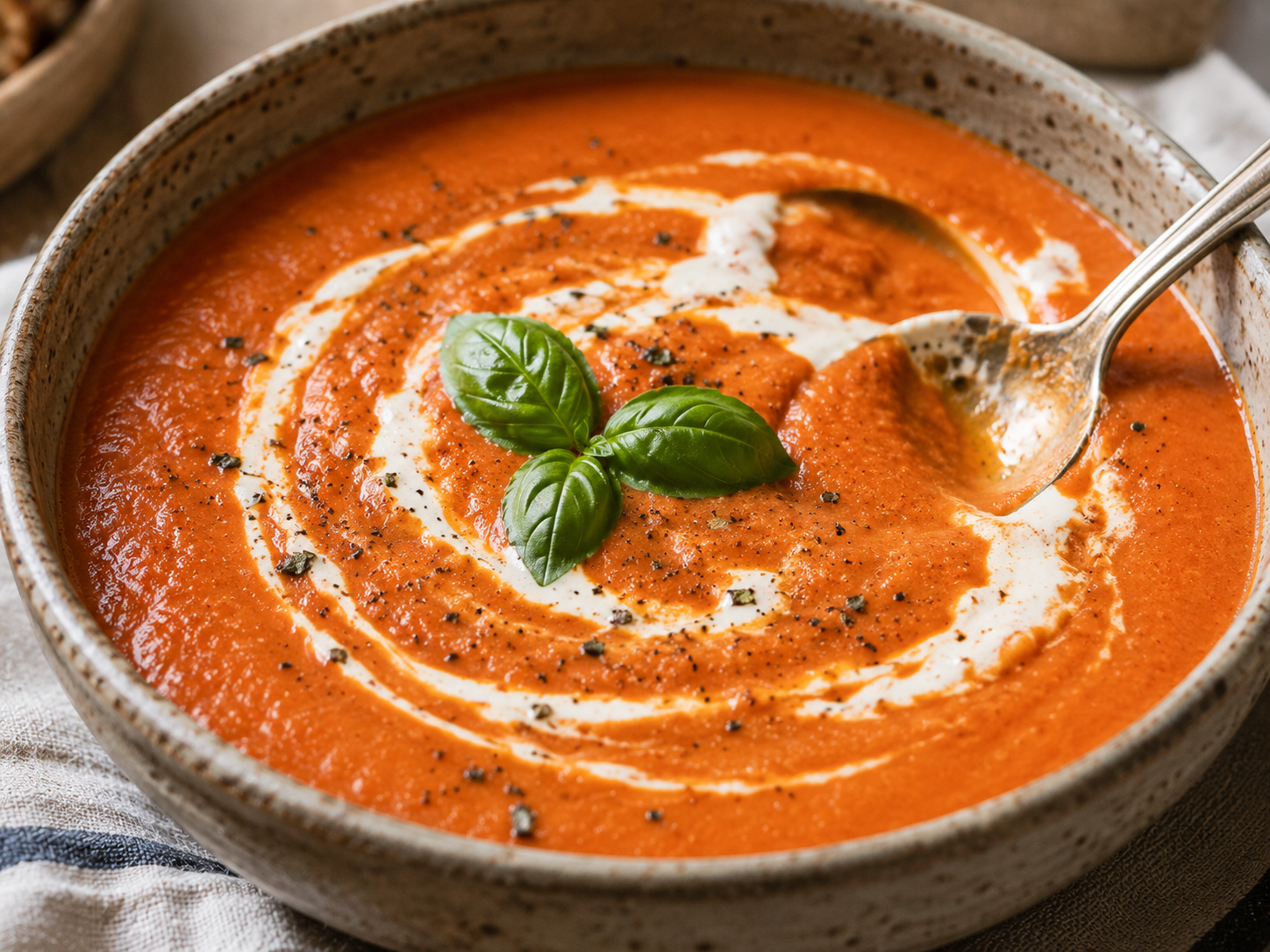
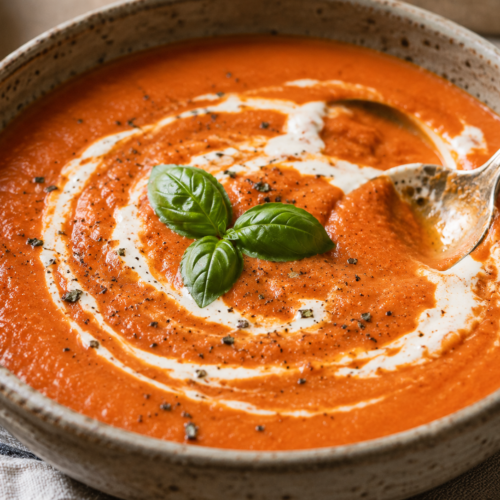
Friends, this creamy tomato soup is about to end your relationship with the canned stuff forever. Velvety, deeply savory, roasted tomato flavor in every single spoonful, rich with cream and fresh basil.
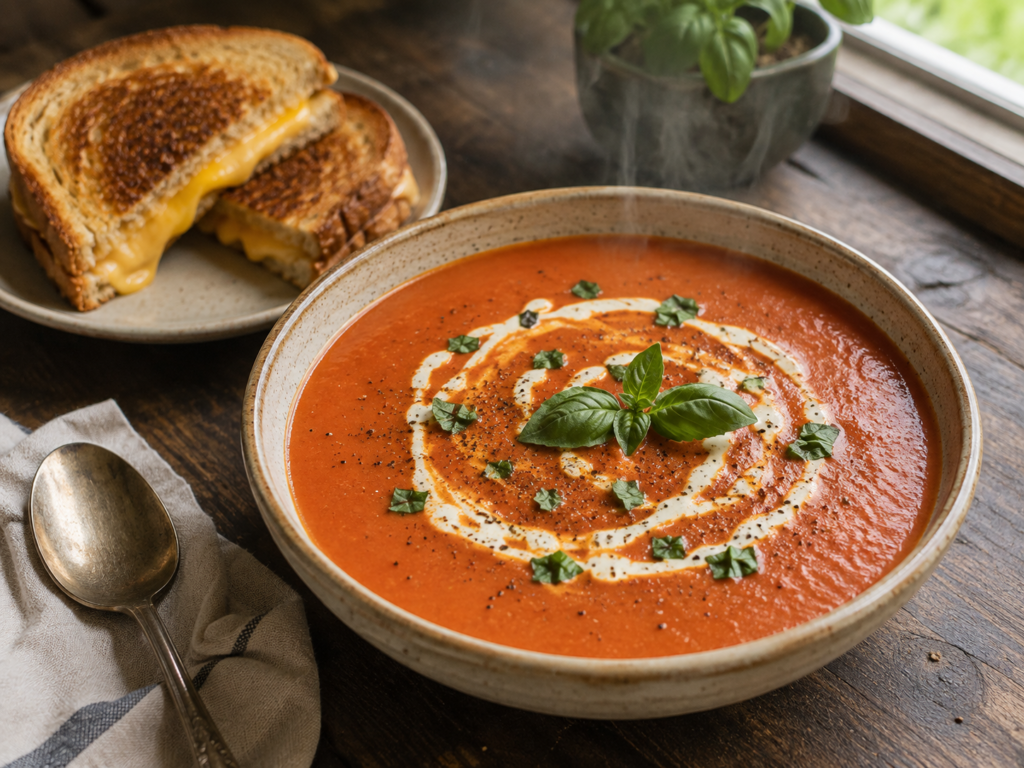
Homemade Creamy Tomato Soup
I used to think tomato soup was just a can and a pot away from dinner, nothing worth actually cooking from scratch. Turns out roasting the tomatoes first changes absolutely everything.
This easy homemade creamy tomato soup uses one simple technique, roasting your vegetables before blending, to transform basic canned-soup flavor into something genuinely restaurant-quality. This is honestly the best tomato soup recipe I’ve made, and once you taste the difference roasting makes, you’ll understand exactly why.
Grab a sheet pan and your blender, because this quick comforting soup is about to become your new favorite rainy-day dinner. No fancy equipment required, just a bit of roasting time while you do literally anything else.
I’ve made countless versions of this over the years, and roasting the vegetables first is genuinely the single change that took this from decent to unforgettable. What follows is exactly why that step matters so much, plus every trick for a genuinely velvety finish.
Homemade Creamy Tomato Soup
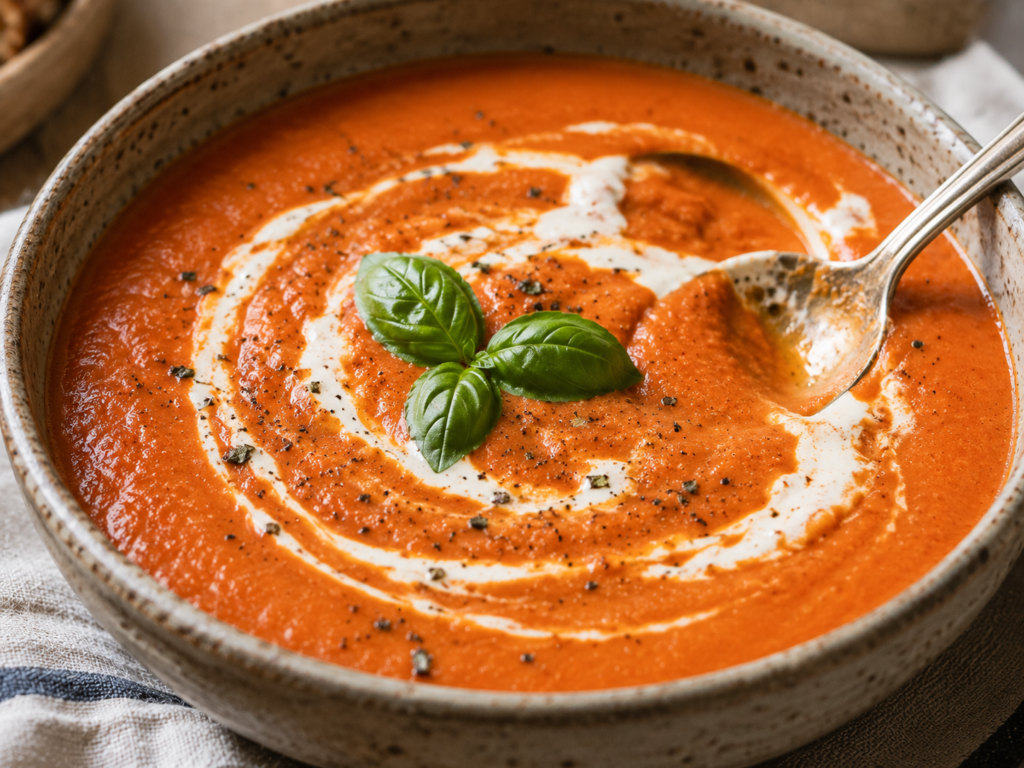
Why You’ll Love This Recipe & The Roasting Secret
Here’s the culinary science behind genuinely great creamy tomato soup: roasting your Roma tomatoes, garlic, and onion at high heat before blending fundamentally changes their flavor profile. Dry, direct heat triggers the Maillard reaction and caramelization simultaneously, breaking down complex sugars and proteins into hundreds of new, deeply savory flavor compounds.
Raw or simply simmered tomatoes retain a sharper, more one-dimensional acidity, since none of that caramelization has had a chance to occur. Roasting evaporates excess moisture too, concentrating both sweetness and umami depth into a base that tastes dramatically richer than a quick stovetop version ever could.
Garlic and onion roasted alongside the tomatoes undergo this same transformation. Their natural sugars caramelize into something sweet and mellow rather than sharp and raw, which is exactly why this roasted tomato soup with basil tastes so much rounder and more complex than a creamy tomato soup built from unroasted ingredients.
This is genuinely the single biggest difference between a bland, acidic tomato soup and a deeply savory, balanced one. Roasting doesn’t just add flavor, it actively transforms the chemical makeup of your vegetables into something richer, sweeter, and far more interesting.
Time and temperature both matter here. Roasting at 400°F strikes a good balance, hot enough to trigger genuine caramelization within a reasonable timeframe, without scorching the vegetables before their interiors have a chance to soften and concentrate properly. Pull them too early, and you lose much of that flavor transformation that makes creamy tomato soup taste so dramatically better than a quick stovetop version.
The second key technique here involves the cream. Heavy cream needs to be stirred in gently, off direct high heat, since its proteins can seize and curdle if exposed to sudden, aggressive boiling once combined with an acidic tomato base.
Think of the cream as forming a delicate emulsion with your hot tomato broth rather than simply mixing in. Gradual incorporation at a lower temperature allows the cream’s fat molecules to disperse evenly throughout the liquid, creating that smooth, velvety consistency rather than a broken, separated texture.
Ingredients You’ll Need (Smart Substitutions)
Here’s everything that goes into a genuinely great creamy tomato soup, and why each ingredient earns its place.
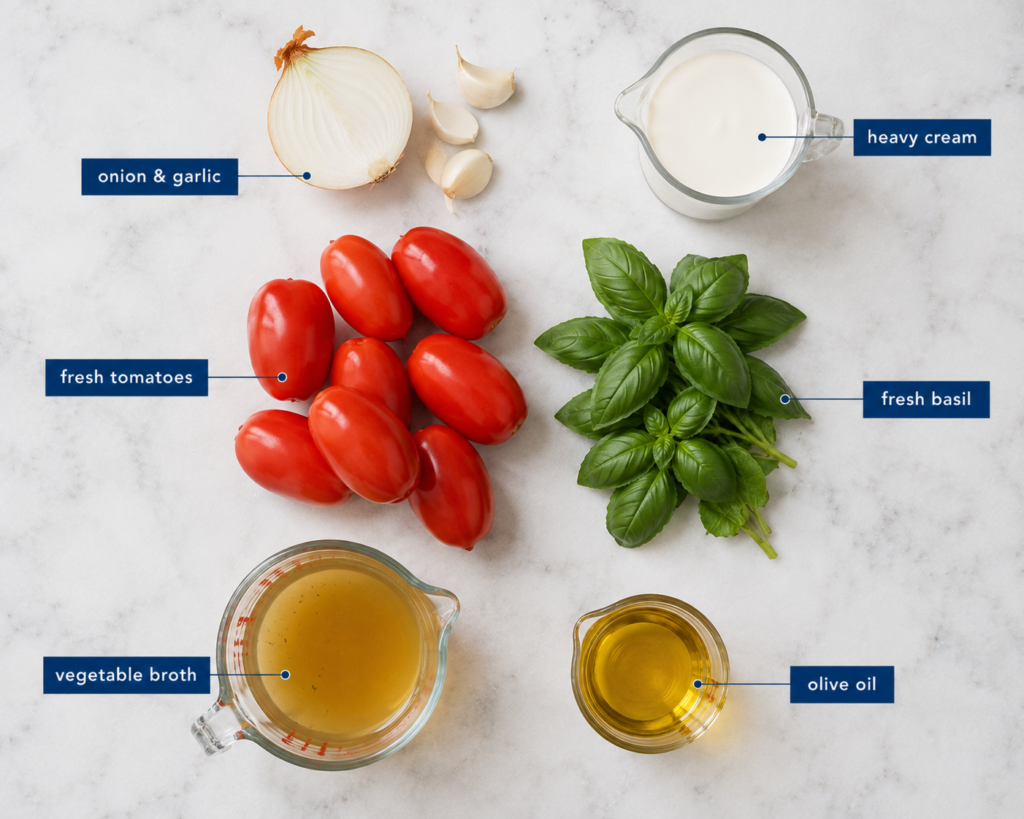
- Fresh Roma or plum tomatoes: Their lower water content and higher flesh-to-seed ratio make them ideal for roasting, concentrating flavor without turning watery.
- Yellow onion and fresh garlic cloves: Roasted alongside the tomatoes, both caramelize into a sweet, mellow aromatic base for the whole soup.
- Vegetable broth: Provides body and savory depth once blended with your roasted vegetables; low-sodium lets you control the final seasoning yourself.
- Heavy whipping cream: Adds richness and that signature velvety texture to any great creamy tomato soup; stirred in gently at the very end to avoid curdling.
- Fresh basil leaves: Added off the heat right before serving, contributing bright, herbaceous freshness against the rich, roasted tomato base.
- Olive oil, salt, and pepper: Used to coat your vegetables before roasting and to season the finished soup generously to taste.
How to Make the Best Creamy Tomato Soup Step-by-Step
Here’s exactly how this creamy tomato soup comes together, from raw vegetables to a velvety, roasted finish.
Stage 1: Roasting the Vegetables. Halve your Roma tomatoes and toss them with quartered onion and whole garlic cloves in olive oil, salt, and pepper. Spread everything in a single layer on a sheet pan and roast at 400°F until the tomatoes are visibly blistered and slightly charred at the edges.
Stage 2: Blending Until Completely Smooth. Transfer your roasted vegetables, along with any flavorful juices left on the pan, into a blender with vegetable broth. Blend until completely smooth, working in batches if needed, then pour the mixture into a large pot.
Stage 3: Simmering & Stirring in Cream and Basil. Bring your blended soup to a gentle simmer over medium heat, letting it warm through and meld for several minutes. Reduce the heat to low, then stir in heavy cream gradually, keeping the soup at a gentle simmer rather than a hard boil.
Add fresh basil right at the end, off the heat, stirring it through just before serving. Taste and adjust seasoning with additional salt and pepper, then ladle your creamy tomato soup into bowls while it’s still warm and velvety.
Pro Chef Tips & Troubleshooting
Even a well-tested batch of creamy tomato soup can go wrong in a few predictable ways, so here’s how to catch and fix each one fast.
| Problem/Mistake | Why It Happens | How to Fix It |
|---|---|---|
| Soup tastes too acidic or tart | Tomatoes not roasted long enough, or roasting skipped entirely | Roast tomatoes until well blistered and caramelized to naturally reduce acidity and boost sweetness |
| Cream curdles in the soup | Cream added over high heat or the soup boiled hard afterward | Reduce heat to low before adding cream and keep the soup at a gentle simmer from that point forward |
| Grainy, separated texture | Soup blended before fully cooling slightly, or blended at too high a speed with hot liquid | Blend in batches, venting the lid to release steam, and avoid overfilling the blender |
| Bland, flat flavor | Under-seasoning, or skipping the roasting step entirely | Season generously in stages and always roast vegetables for real depth of flavor |
| Soup too thick | Not enough broth added during blending | Add extra vegetable broth gradually until you reach your desired consistency |
| Basil turns dark and bitter | Added too early and simmered along with the soup | Stir in fresh basil only at the very end, off the heat, right before serving |
A quick word on texture consistency: for the smoothest possible creamy tomato soup, a high-powered blender genuinely outperforms an immersion blender, though both get the job done well enough for most home kitchens.
Homemade Creamy Tomato Soup
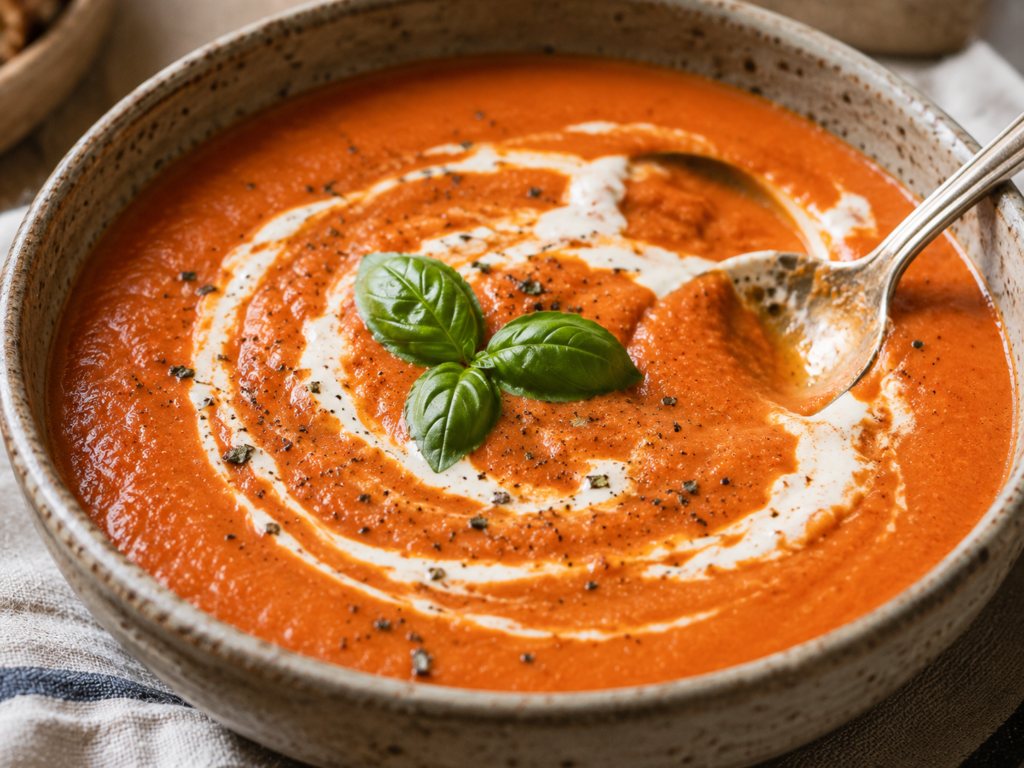
What to Serve with Creamy Tomato Soup (Serving Suggestions)
Nothing beats a hot, velvety bowl of homemade creamy tomato soup, but pairing it with the right sides takes this classic comfort food to an elite level! Here are the absolute best ways to serve and elevate your tomato soup:
- Crispy smoky bacon: A savory, salty topping that elevates the comforting flavors with every single bite.
- Classic grilled cheese: The ultimate dipping partner with gooey melted cheese that complements the rich, velvety tomato flavor.
- Golden homemade croutons: Adds an irresistibly crunchy texture and garlic-herb punch to every warm spoonful.
- Peppery arugula salad: Tossed in a light lemon vinaigrette to cut through the soup’s rich, creamy texture.
- Warm rosemary focaccia: A pillow-soft bread with a savory herb crust, perfect for dunking straight into the bowl.
The Ultimate Pairing: Grilled Cheese & More
No bowl of creamy tomato soup is complete without a proper grilled cheese sandwich on the side, and honestly, this pairing earns its iconic status. The acidity and richness of the soup plays beautifully against a buttery, crispy, cheese-stuffed sandwich, creating that classic dunk-and-bite combination people crave on cold days.
There’s genuine culinary logic behind why this pairing works so well, beyond just nostalgia. The soup’s bright acidity cuts through the richness of melted cheese and butter, while the crispy, toasted bread adds textural contrast against the smooth, velvety soup, making each bite feel balanced rather than one-note.
For the best grilled cheese pairing, butter your bread generously all the way to the edges and cook low and slow, so the cheese fully melts before the bread over-browns. A sharp cheddar or a gooey combination of cheddar and mozzarella both work beautifully alongside this quick comforting soup.
Beyond grilled cheese, this creamy tomato soup also pairs nicely with crusty bread for dipping, a simple side salad, or even a grilled cheese made with sourdough for extra tang against the roasted tomato flavor.
Frequently Asked Questions (FAQ)
These are the questions people ask most often about making genuinely great creamy tomato soup at home.
Can I use canned tomatoes instead of fresh?
Yes, canned whole or crushed tomatoes work as a substitute, though you’ll miss out on some of the caramelized depth that roasting fresh tomatoes provides. If using canned, consider roasting them briefly under the broiler alongside your onion and garlic to recapture some of that same flavor transformation for your creamy tomato soup.
Why did my heavy cream curdle in the tomato soup?
This almost always happens when cream is added over high heat or the soup is boiled hard afterward, causing the dairy proteins to seize and separate. Always reduce heat to low before stirring in cream, and keep your creamy tomato soup at a gentle simmer from that point onward.
Can I freeze creamy tomato soup?
It’s best to freeze the soup before adding cream, since dairy-based soups can separate slightly in texture once thawed. Freeze the roasted tomato base for up to 3 months, then thaw, reheat gently, and stir in fresh cream just before serving for the best final texture.
What can I substitute for heavy cream to make it dairy-free?
Full-fat coconut milk or a cashew cream blend both work well as dairy-free substitutes, adding richness similar to heavy cream. The flavor will shift slightly, especially with coconut milk, but the overall creamy texture of the soup stays largely intact.
How do I fix tomato soup that tastes too acidic?
A small pinch of sugar can help balance excess acidity if your tomatoes weren’t roasted long enough or were simply more tart to begin with. Roasting properly in the first place is the best long-term fix for creamy tomato soup, since it naturally reduces acidity through caramelization before the sugar ever needs to step in.
you can check more recipes from here
Easy Homemade Creamy Tomato Soup (Best 30-Min Recipe!)
Ingredients
- 2.5 lbs fresh Roma or plum tomatoes halved
- 1 medium yellow onion quartered
- 5 cloves garlic whole
- 3 tbsp olive oil
- 2 cups vegetable broth
- 3/4 cup heavy whipping cream
- 1/4 cup fresh basil leaves plus more for garnish
- Salt and black pepper to taste
Instructions
- Toss tomatoes, onion, and garlic with olive oil, salt, and pepper, then roast at 400°F until blistered.
- Blend roasted vegetables with vegetable broth until completely smooth.
- Pour blended soup into a pot and bring to a gentle simmer.
- Reduce heat to low and stir in heavy cream gradually.
- Stir in fresh basil off the heat right before serving.
- Taste and adjust seasoning with salt and pepper before ladling into bowls.
Notes
- Never boil the soup after adding the cream; keep it at a gentle simmer to prevent curdling.
- Use an immersion blender directly in the pot for convenience, avoiding the need to transfer hot liquid to a countertop blender.
- Roast the tomatoes until well blistered and slightly charred for the best natural sweetness and reduced acidity.