
Best Homemade Mac and Cheese (Easy 30-Min Recipe!)
Friends, this homemade mac and cheese is about to end grainy, bland, boxed mac and cheese forever. Ultra velvety, deeply cheesy, glossy sauce clinging to every single noodle.

Homemade Mac and Cheese
I used to think boxed mac and cheese was just a convenient shortcut, close enough to the real thing to not bother making it from scratch. Turns out that assumption was completely wrong, and once you taste properly made homemade mac and cheese, there’s genuinely no going back.
This best creamy mac and cheese comes down to a few specific techniques most people skip: grating your own cheese, building a proper roux, and adding a pinch of dry mustard powder to amplify the cheddar flavor. This easy stovetop mac and cheese comes together in about 25 minutes, no oven required, and tastes dramatically better than anything from a box.
Grab a big pot, because this macaroni and cheese from scratch is about to become your new go-to comfort food side dish for absolutely everything. No specialty ingredients, no complicated technique, just a handful of smart choices that make a genuinely dramatic difference.
I’ve tested this exact combination more times than I can count, chasing that perfect balance of tangy, sharp cheese and glossy, velvety sauce. What follows is exactly why each step matters, so you understand the science behind every single bite.
Homemade Mac and Cheese

Why You’ll Love This Recipe & The Secret to Velvety Sauce
Here’s the culinary science behind genuinely velvety homemade mac and cheese: never, ever use pre-shredded, bagged cheese. Bagged cheese is coated in cellulose and other anti-caking agents specifically designed to prevent the shreds from clumping together in the bag, and that same coating resists melting smoothly once it hits your sauce.
Grating cheese fresh off a block eliminates that problem entirely, allowing it to melt into a genuinely smooth, cohesive sauce rather than a grainy, separated mess. This single swap is honestly the biggest difference between homemade mac and cheese that tastes restaurant-quality and one that falls disappointingly short.
The second key technique is building a proper roux, made by cooking butter and flour together before adding any liquid. Cooking the flour this way coats each starch granule in fat, allowing it to disperse smoothly into your milk and cream without clumping into lumps.
This roux becomes the stable base your cheese sauce needs, since cheese alone, melted directly into milk, has a tendency to separate and turn oily once heated too aggressively. A proper roux gives the whole sauce structure, holding everything together into one cohesive, glossy homemade mac and cheese instead.
Then there’s the dry mustard powder trick, which sounds unusual but makes a real difference. Mustard powder contains enzymes and compounds that actually enhance and sharpen the perception of cheddar’s flavor, making your finished homemade mac and cheese taste noticeably more cheesy without needing to add more actual cheese.
Optimal cheese melting temperature matters here too, and it’s worth understanding briefly. Cheese proteins begin to separate from their fat when exposed to temperatures much above 165°F for too long, which is exactly why removing your pot from direct heat before stirring in cheese is so essential; the residual warmth is plenty to melt everything smoothly without ever risking that harsh separation.
Ingredients You’ll Need (Smart Substitutions)
Here’s everything that goes into building genuinely great homemade mac and cheese, and why each ingredient earns its place.
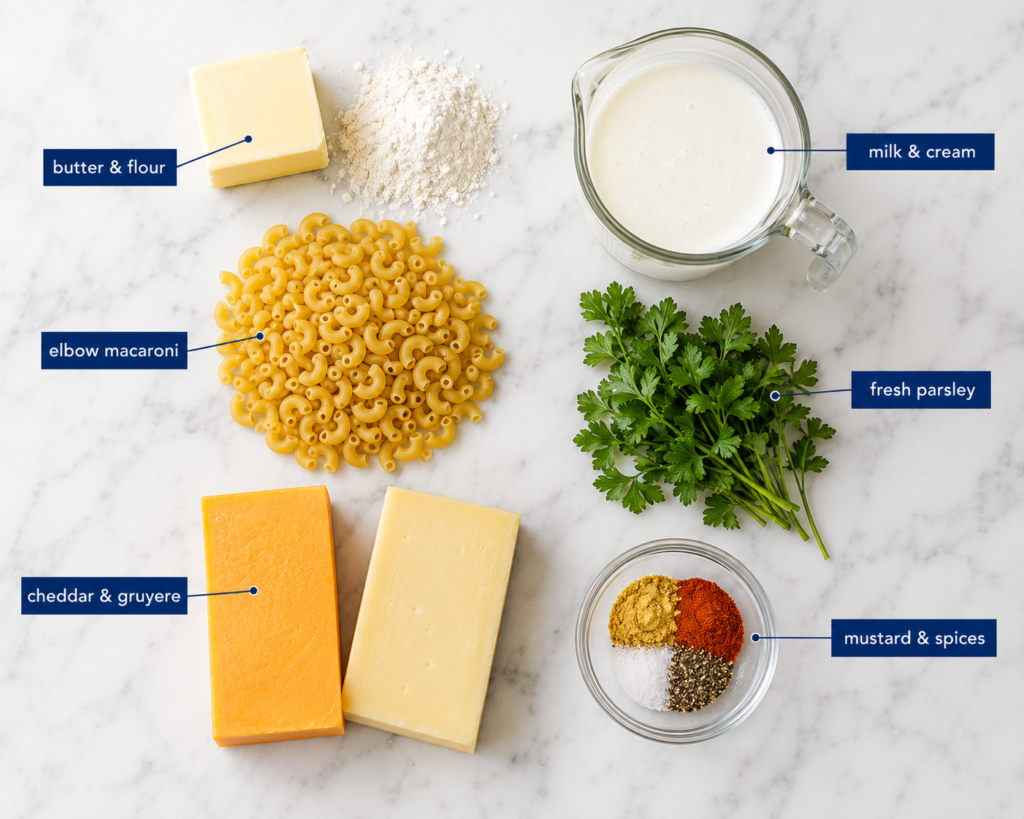
- Dry elbow macaroni: The classic pasta shape, with plenty of surface area and curves that hold onto the cheese sauce beautifully.
- Unsalted butter and all-purpose flour: Combined to build your roux, the stable, lump-free foundation your cheese sauce depends on.
- Whole milk and heavy cream: Whole milk provides body while heavy cream adds extra richness; combining both gives you the ideal balance of lightness and indulgence.
- Freshly grated sharp cheddar and gruyere cheese blocks: Sharp cheddar brings classic, tangy flavor, while gruyere melts exceptionally smoothly and adds subtle nutty depth to this homemade mac and cheese.
- Dry mustard powder and smoked paprika: Mustard powder amplifies the cheddar’s sharpness, while smoked paprika adds a subtle smoky warmth throughout the sauce.
- Fresh parsley for garnish: Adds a pop of color and a touch of freshness against all that rich, cheesy sauce.
How to Make the Best Mac and Cheese Step-by-Step
Stage 1: Boiling Pasta Strictly Al Dente. Cook your elbow macaroni in well-salted boiling water for about 1 minute less than the package directions suggest, since it will continue absorbing sauce and softening slightly once combined. Drain thoroughly and set aside while you build your cheese sauce.
Stage 2: Building the Roux & Whisking in Milk/Cream. In a large pot, melt butter over medium heat, then whisk in flour and cook for a minute or two, stirring constantly, until lightly golden and no longer smelling raw. Gradually whisk in your milk and cream, a little at a time, whisking continuously to prevent any lumps from forming.
Adding liquid gradually, rather than all at once, genuinely matters here. Whisking in small amounts allows the roux to absorb and incorporate each addition smoothly before more is added, which is exactly what keeps your finished base perfectly lump-free.
Continue whisking and simmering gently until the mixture thickens enough to coat the back of a spoon. Stir in your dry mustard powder and smoked paprika at this stage, letting them dissolve evenly throughout the thickened base.
Stage 3: Melting Cheese Off Heat & Folding in Pasta. Remove the pot from direct heat completely, then add your freshly grated cheddar and gruyere gradually, stirring continuously until each addition melts smoothly before adding more. This off-heat method is essential, since direct high heat can cause the cheese proteins to seize and separate into an oily, grainy mess.
Fold in your cooked elbow macaroni, stirring gently until every piece is coated in that glossy, velvety cheese sauce. Taste and adjust seasoning, then garnish with fresh parsley before serving your homemade mac and cheese immediately while it’s still warm and silky.

Pro Chef Tips & Troubleshooting
Even a well-tested batch of homemade mac and cheese can go wrong in a few predictable ways, so here’s how to catch and fix each one fast.
| Problem/Mistake | Why It Happens | How to Fix It |
|---|---|---|
| Grainy, clumpy sauce | Pre-shredded bagged cheese used, or cheese added over direct high heat | Always grate cheese fresh off a block and add it off the heat, stirring gradually |
| Bland flavor despite the cheese | Mustard powder and smoked paprika skipped, or under-seasoned overall | Always include mustard powder to enhance cheddar’s sharpness, and season generously in stages |
| Oily separation in the sauce | Roux undercooked, or cheese melted too aggressively over high heat | Cook the roux fully before adding liquid, and always melt cheese off direct heat |
| Sauce too thick and clumps together | Not simmered long enough before adding cheese, or too much flour used | Simmer the milk mixture until properly thickened, and measure flour carefully |
| Pasta turns mushy | Macaroni boiled fully to al dente or beyond before combining with sauce | Boil pasta about 1 minute less than package directions, since it continues absorbing sauce |
| Sauce breaks upon reheating | Reheated over high heat or in the microwave on full power | Reheat gently over low heat with a splash of extra milk, stirring frequently |
A quick word on cheese ratios: too much cheese relative to your roux base can actually cause separation too, since there’s simply more fat and protein than the sauce structure can properly hold in suspension. Stick close to the ratios in this recipe for the most reliable, velvety results.
What to Serve with Mac and Cheese
A rich, velvety bowl of homemade mac and cheese is the ultimate comfort food! Whether you are serving it as a decadent main course or a crowd-pleasing holiday side dish, pairing it with the right recipes takes it to the next level. Here are my absolute favorite ways to complete the meal:
A Sweet Bakery Finish: Every comforting homemade meal deserves an equally comforting dessert. Treat yourself afterward to a warm, bakery-style batch of Chewy Chocolate Chip Cookies straight from the oven!
The Ultimate Comfort Dinner: Pair this cheesy masterpiece with a hearty, savory main course. It is absolutely incredible served alongside our rich Easy Salisbury Steak with Onion Gravy or some juicy, tender pan-seared pork chops.
The Quick Steakhouse Vibe: Want a luxurious, restaurant-quality dinner in record time? Serve your creamy mac and cheese right next to our sizzling, 15-minute Garlic Butter Steak Bites.
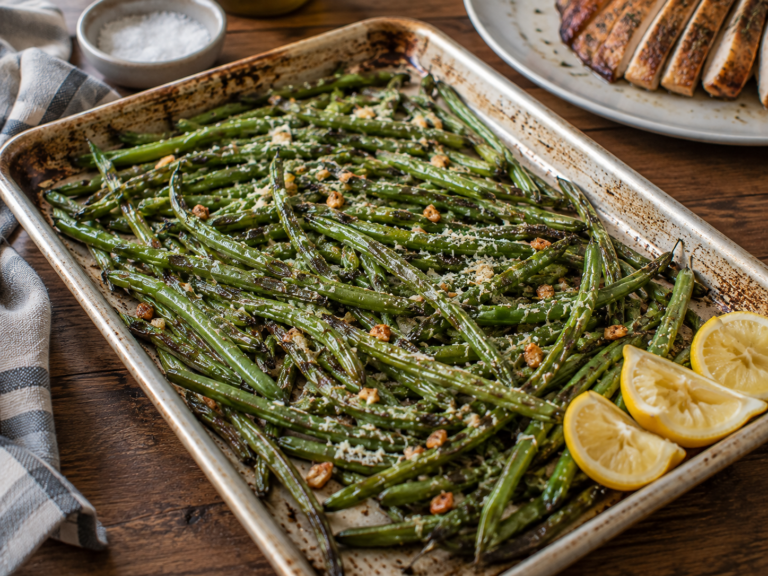
A Vibrant Veggie Contrast: You need something fresh and crunchy to cut through the richness of the heavy cheese sauce! Balance your plate beautifully with our Easy Oven Roasted Green Beans or some sweet and tender Garlic Butter Roasted Carrots.
Frequently Asked Questions (FAQ)
These are the questions people ask most often about making genuinely great homemade mac and cheese.
Why did my mac and cheese turn out grainy?
This almost always comes down to using pre-shredded, bagged cheese, which contains anti-caking agents that resist melting smoothly. Always grate cheese fresh off a block and add it to your sauce off direct heat for genuinely velvety homemade mac and cheese.
Can I bake this homemade mac and cheese?
Yes, transfer the finished stovetop mixture to a baking dish, top with extra shredded cheese or breadcrumbs, and bake at 375°F for about 15-20 minutes until golden and bubbly on top. This gives you a baked version of homemade mac and cheese with a crispy top layer while keeping the same creamy base underneath, perfect for holiday tables or larger gatherings.
What are the best cheeses to use for melting?
Sharp cheddar and gruyere are the classic combination for homemade mac and cheese, offering both tangy flavor and exceptionally smooth melting properties. Other good melting options include Monterey Jack, fontina, and young gouda, all of which blend smoothly into a cheese sauce without turning grainy or greasy.
Can I make mac and cheese ahead of time?
Yes, prepare the sauce and pasta separately, then combine and gently reheat together just before serving for the best texture in your homemade mac and cheese. Fully combined homemade mac and cheese can also be refrigerated for a day or two, though the sauce may need a splash of extra milk when reheating to restore its original silkiness.
How do I reheat leftovers without the sauce separating?
Reheat gently in a saucepan over low heat, stirring frequently and adding a splash of milk to loosen the sauce as needed. Avoid the microwave on high power if possible, since its uneven heat is one of the most common reasons reheated homemade mac and cheese turns oily and separated.
you can check more recipes from here

Best Homemade Creamy Mac and Cheese (Easy Recipe!)
Ingredients
- 1 lb dry elbow macaroni
- 4 tbsp unsalted butter
- 1/4 cup all-purpose flour
- 2 cups whole milk
- 1 cup heavy cream
- 2 cups freshly grated sharp cheddar cheese
- 1 cup freshly grated gruyere cheese
- 1 tsp dry mustard powder
- 1/2 tsp smoked paprika
- 2 tbsp fresh parsley chopped, for garnish
- Salt and black pepper to taste
Instructions
- Boil macaroni about 1 minute less than package directions, then drain.
- Melt butter in a large pot, whisk in flour, and cook until lightly golden.
- Gradually whisk in milk and cream, simmering until thickened.
- Stir in mustard powder and smoked paprika.
- Remove from heat and gradually stir in grated cheddar and gruyere until smooth.
- Fold in the cooked macaroni until evenly coated in the sauce.
- Garnish with fresh parsley and serve immediately.
Notes
- Always grate cheese fresh off a block; bagged, pre-shredded cheese resists melting smoothly.
- Take the pot off the heat before adding cheese to prevent grainy, oily separation.
- Boil pasta about 1 minute less than package directions, since it continues cooking once combined with the sauce.