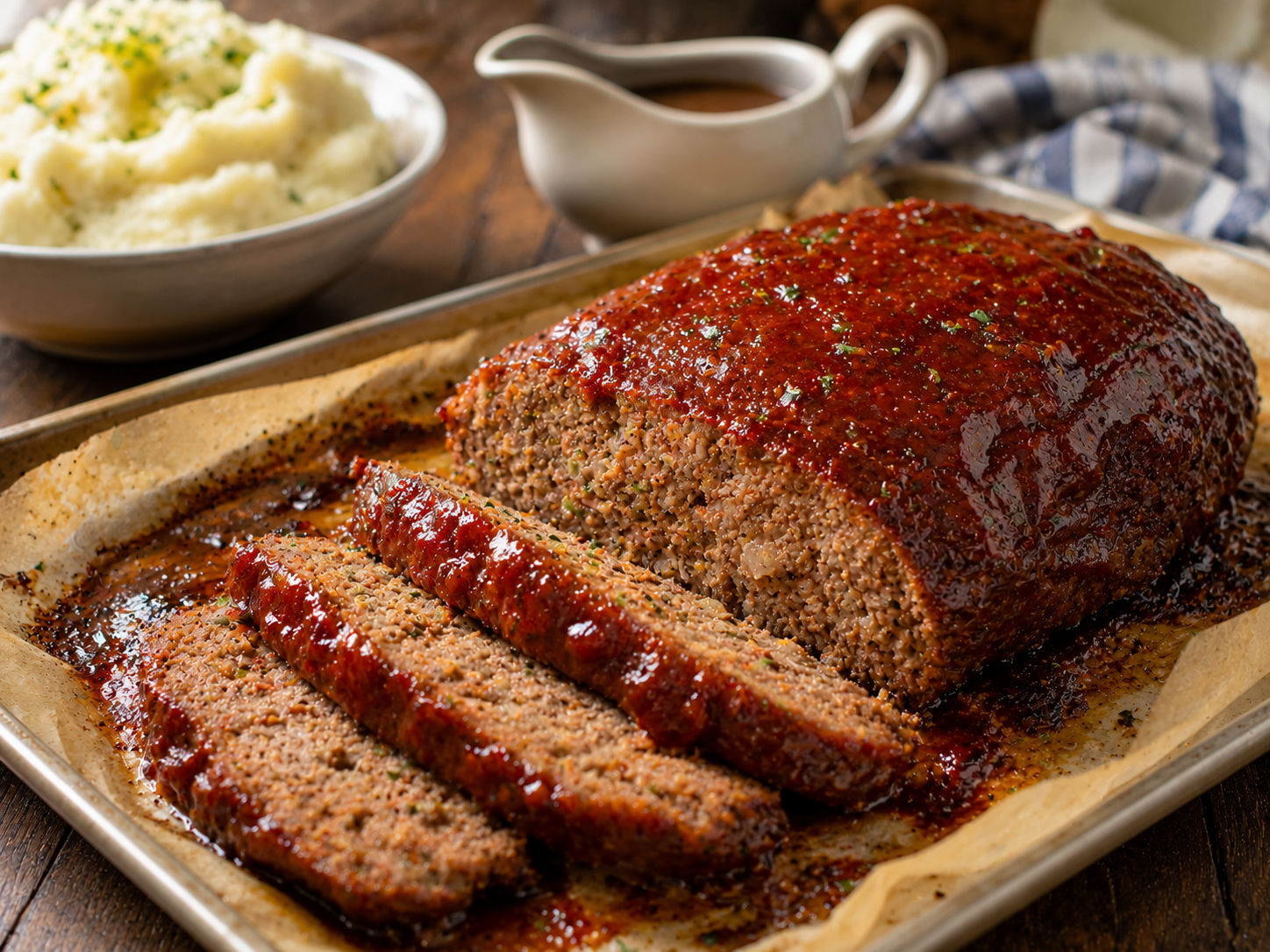
Easy Homemade Classic Meatloaf (Juicy & Tender)
Friends, this classic meatloaf is here to erase every memory of the dry, brick-like slab you choked down in the school cafeteria. Juicy, tender, glazed in sweet-tangy sauce, and genuinely foolproof.
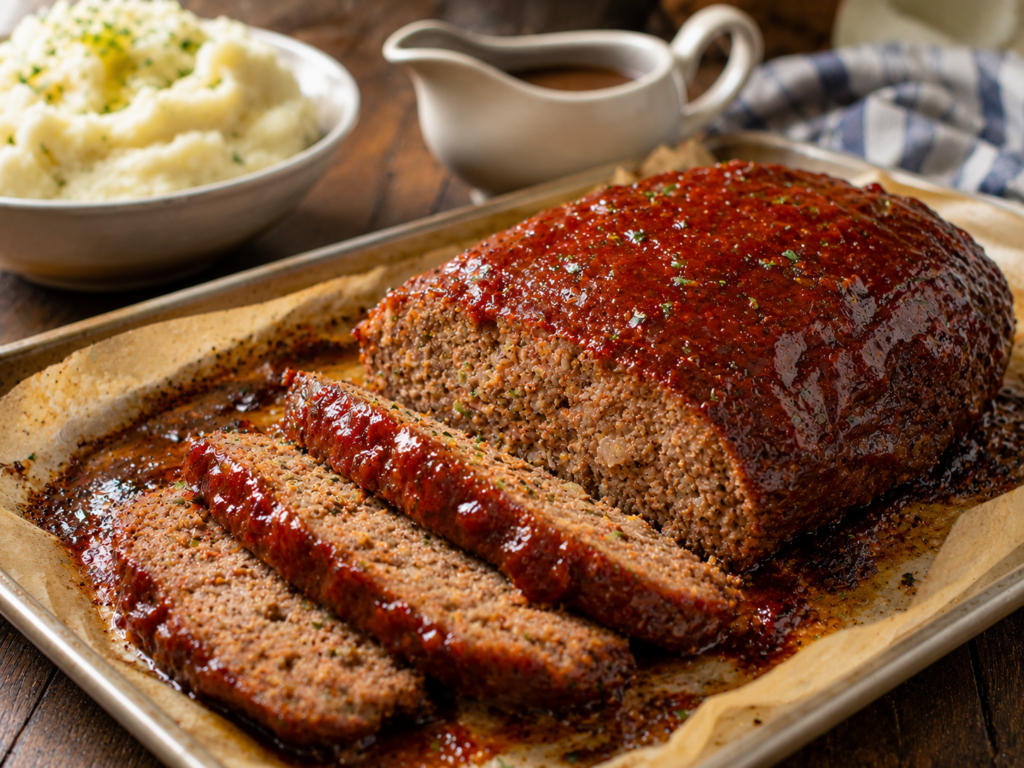
Easy Homemade Classic Meatloaf
I get it, meatloaf has a reputation problem. Too many versions turn out dense, dry, and flavorless, which is a real shame because a properly made classic meatloaf is one of the most comforting things you can pull out of an oven.
The secret to truly great classic meatloaf comes down to two things most recipes skip or get wrong: a proper panade of milk-soaked breadcrumbs that traps moisture throughout the loaf, and choosing the right beef fat ratio to keep everything rich and juicy. Get those two details right, and you’ve got yourself a genuinely best homemade meatloaf that disappears from the table fast.
This easy classic meatloaf comes together with pantry staples, bakes hands-off in the oven, and gets finished with a sweet, tangy ketchup-mustard glaze that caramelizes into something genuinely craveable. Whether it’s a Tuesday night dinner or a make-ahead meal prep staple, this easy meatloaf recipe is about to become a permanent fixture in your rotation.
Let’s fix meatloaf’s reputation once and for all.
Why This Easy Classic Meatloaf Stays Incredibly Juicy (The Panade Secret)
Here’s what separates truly great classic meatloaf from the dry, dense kind: a panade, which is simply breadcrumbs soaked in milk before they’re mixed into the meat. This soaked bread mixture swells with liquid and distributes evenly throughout the loaf, acting like a moisture reservoir that keeps releasing liquid slowly as the meatloaf bakes.
Skip the panade, or use dry breadcrumbs straight from the box, and you lose that built-in moisture insurance entirely, which is exactly why so many homemade meatloaf recipes turn out dry despite using plenty of fat in the meat itself. The soaked bread also physically breaks up the meat’s protein structure slightly, preventing the dense, compacted texture that happens when ground beef binds too tightly during cooking.
The beef itself matters just as much here. 80/20 ground beef, meaning 80% lean meat and 20% fat, is the sweet spot for juicy beef meatloaf, since that fat renders slowly throughout the bake, self-basting the loaf from within.
Leaner ground beef, like 90/10, can work in a pinch, but it dries out more easily since there’s simply less internal fat to keep things moist over the longer cook time a full loaf requires. Combine the panade with 80/20 beef, and you’ve solved the two biggest reasons classic meatloaf turns out disappointing in the first place.
Mixing gently matters too, and it’s worth mentioning here since it ties directly into texture. Overmixing develops the meat’s proteins too much, creating a dense, bouncy, almost sausage-like texture instead of the tender, easily-sliced crumb a good classic meatloaf should have.
Think of it like kneading bread dough versus barely stirring pancake batter. The more you work ground beef with your hands, the more those long protein strands link together and tighten, which is fantastic for a springy burger patty but genuinely counterproductive for tender classic meatloaf. Mix just until the ingredients are evenly distributed, then stop, even if a few loose bits remain visible.
Easy Homemade Classic Meatloaf
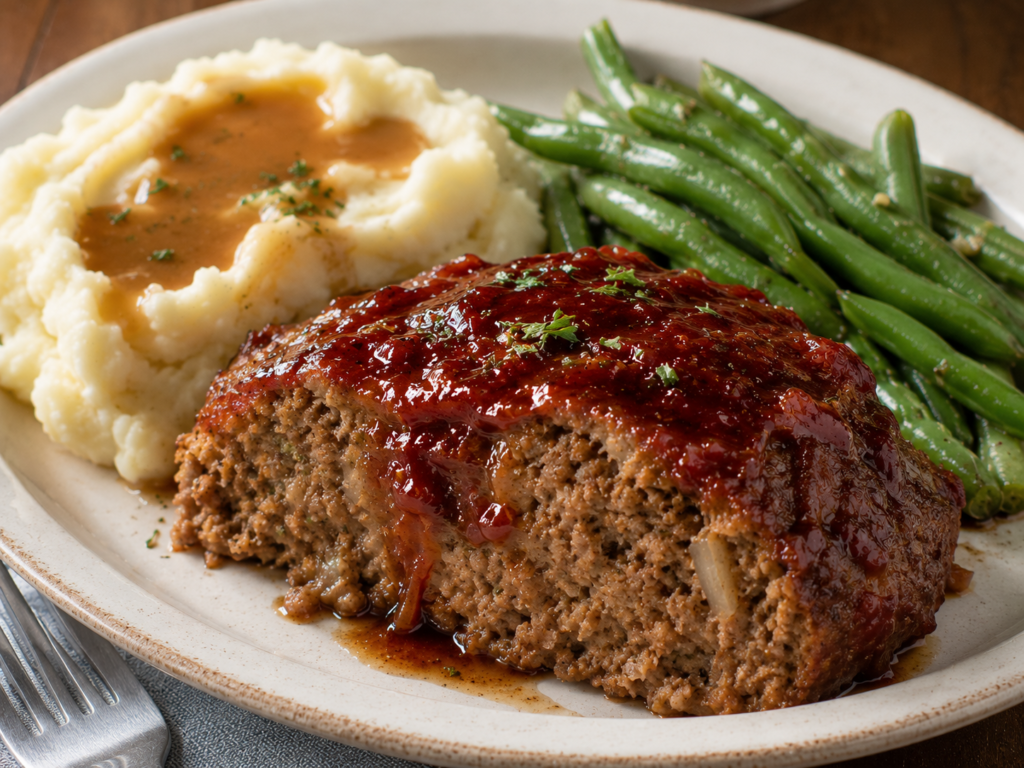
Baking Sheet vs. Loaf Pan: The Secret to Crispy Edges
Here’s a detail that genuinely transforms your classic meatloaf: skip the narrow bread loaf pan and shape your loaf freeform on a parchment-lined, rimmed baking sheet instead. A loaf pan traps rendered fat and juices around the sides of the meat, essentially boiling the loaf in its own grease rather than roasting it.
On an open sheet pan, that same rendered fat drains away from the loaf as it cooks, allowing the exterior to actually roast and caramelize rather than steam in a pool of grease. This is the difference between a soft, pale, uniformly-textured loaf and one with genuinely crispy, deeply browned edges all the way around.
Freeform shaping also means more total surface area is exposed to the oven’s heat, which means more opportunity for that glaze to caramelize into something sticky and delicious rather than just sitting wetly on top. If you only have a loaf pan, you can still make a good classic meatloaf, but expect softer edges and drain any excess grease partway through baking if you can.
There’s a temperature dimension here too. A narrow loaf pan insulates the sides of the meat, slowing heat penetration to the center and often forcing you to bake longer just to reach a safe internal temperature, which only increases the risk of drying out the exterior in the process. A wide, open sheet pan exposes more of the loaf directly to the oven’s ambient heat, cooking it more evenly from edge to center in less overall time.
Ingredients You’ll Need for Homemade Classic Meatloaf
Here’s everything that goes into building a truly great classic meatloaf, from the meat mixture itself to that essential glaze.
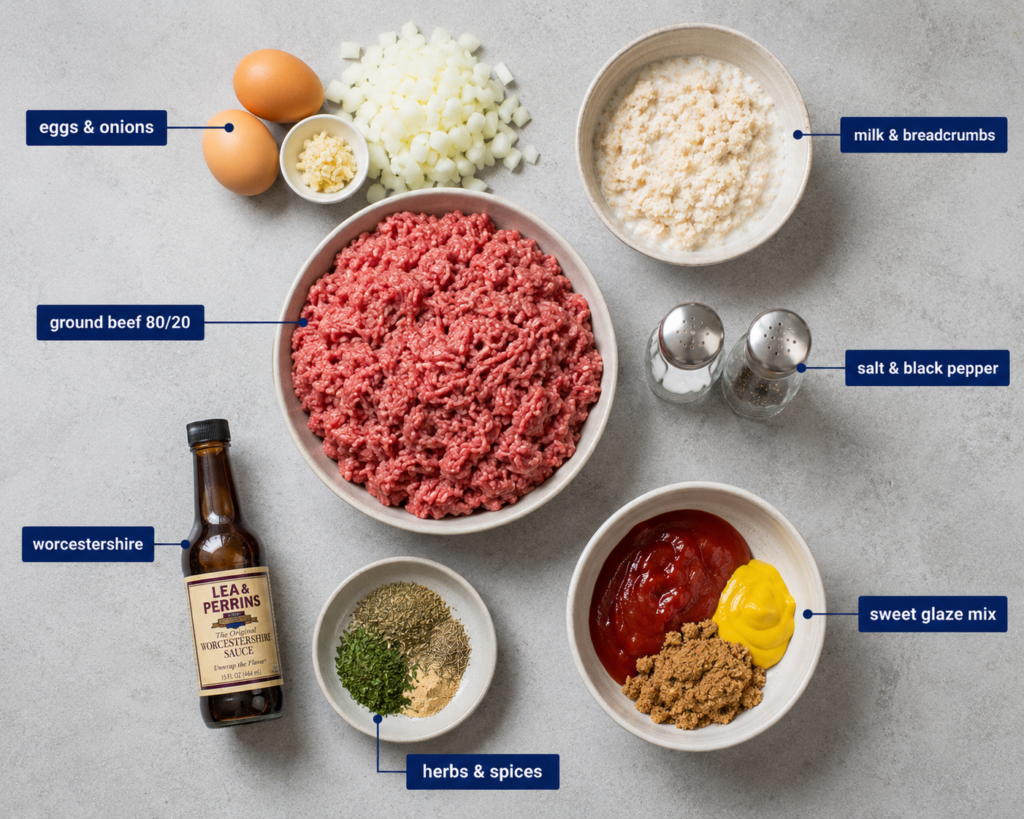
- Ground beef (80/20): The ideal fat ratio for genuinely juicy beef meatloaf; leaner blends work but dry out more easily over the bake time.
- Breadcrumbs or panko: Panko creates a slightly lighter texture thanks to its coarser crumb structure, though standard breadcrumbs work just as well in the panade.
- Whole milk: Used to soak the breadcrumbs into a panade; whole milk’s fat content helps create a richer, more tender crumb than skim milk would.
- Eggs: The binding agent that holds everything together without the need for excessive mixing.
- Minced yellow onion: Adds moisture and savory depth; sauté briefly first if you prefer a milder, softer onion flavor throughout the loaf.
- Garlic: Fresh and minced, for a warm, aromatic backbone.
- Worcestershire sauce: A small amount adds deep umami richness that rounds out the overall flavor of the meat mixture.
- Italian seasoning: A classic herb blend that ties the whole loaf together without overpowering the beef itself.
- Salt and black pepper: Season generously, since a large loaf of meat needs more seasoning than you might initially expect.
- The glaze: Ketchup, brown sugar, yellow mustard, and apple cider vinegar combine into a sweet, tangy topping that caramelizes beautifully in the oven’s heat.
How to Make Classic Meatloaf Step-by-Step
Stage 1: Making the Panade & Mixing Gently. Combine your breadcrumbs and milk in a large bowl and let them sit for a few minutes until fully absorbed and mushy. Add your ground beef, eggs, onion, garlic, Worcestershire sauce, Italian seasoning, salt, and pepper, then mix everything together with your hands just until combined, stopping the moment there are no visible streaks.
Stage 2: Shaping & Initial Roast. Turn the mixture out onto a parchment-lined, rimmed baking sheet and shape it into a freeform loaf, roughly the size and shape of a traditional bread pan but sitting directly on the open sheet. Bake at 350°F for about 35-40 minutes before adding any glaze, giving the exterior time to firm up and begin browning on its own.
Stage 3: Slathering the Tangy Glaze & Final Bake to 160°F. Whisk together your ketchup, brown sugar, mustard, and apple cider vinegar, then generously brush this glaze over the entire top and sides of the partially baked loaf. Return it to the oven for another 15-20 minutes, until the glaze has caramelized into a sticky, glossy coating and the internal temperature reaches a safe 160°F.
Let the finished classic meatloaf rest for a full 10 minutes before slicing; this brief pause allows the juices to redistribute back through the meat rather than spilling out the moment you cut into it.
Easy Homemade Classic Meatloaf
Pro Chef Tips & Troubleshooting
| Problem/Mistake | Why It Happens | How to Fix It |
|---|---|---|
| Dry, dense classic meatloaf | Panade skipped, or lean ground beef used without extra moisture | Always soak breadcrumbs in milk first, and stick with 80/20 ground beef for juiciness |
| Tough, bouncy texture | Meat mixture overmixed while combining ingredients | Mix gently with your hands just until combined, stopping as soon as streaks disappear |
| Soggy bottom, pale sides | Baked in a narrow loaf pan that traps rendered grease | Shape the loaf freeform on a parchment-lined, rimmed baking sheet instead |
| Glaze burns before the loaf is done | Glaze added at the very start of baking instead of partway through | Bake the loaf plain first, then add the glaze during the final 15-20 minutes |
| Loaf falls apart when sliced | Cut into immediately after coming out of the oven | Rest the finished classic meatloaf for a full 10 minutes before slicing |
| Undercooked center despite a browned exterior | Relying on time alone instead of checking internal temperature | Always confirm doneness with a meat thermometer inserted into the thickest part |
What to Serve With Classic Beef Meatloaf
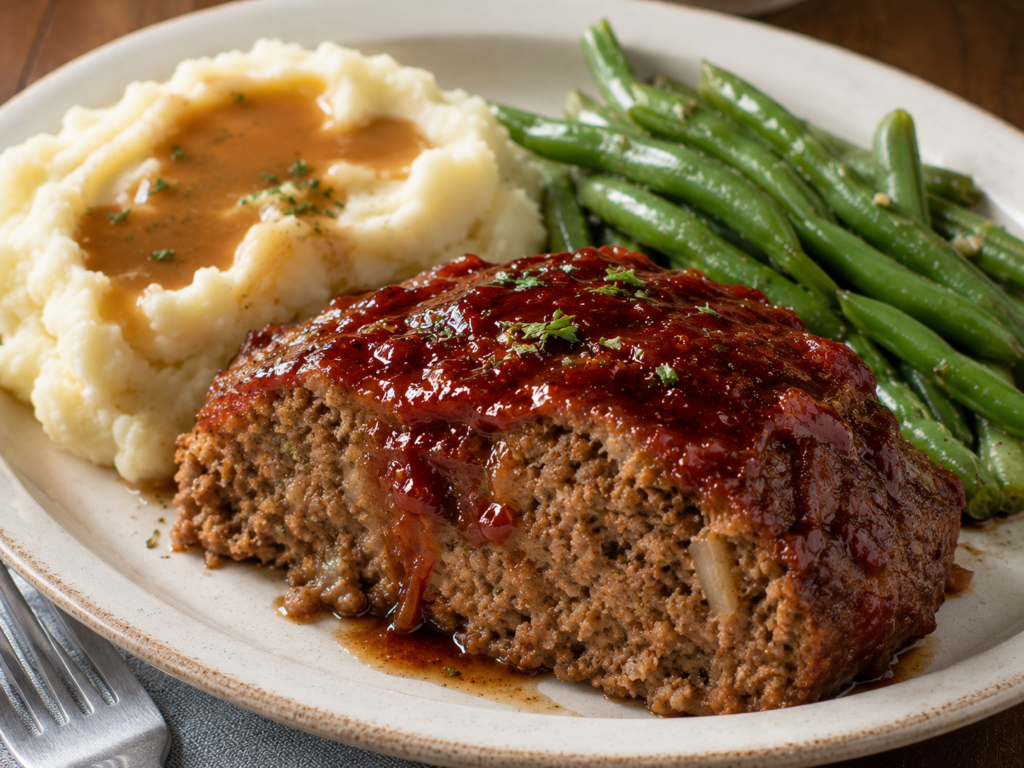
- Garlic mashed potatoes: The quintessential pairing, perfect for soaking up any extra glaze or pan juices.
- Roasted green beans: A simple, slightly charred vegetable side that balances the richness of the meat.
- Buttered corn: A classic, easy addition that rounds out any comfort food dinner spread.
- Mac and cheese: Looking for a creamy side dish to pair with this? Try our viral Homemade Creamy Mac and Cheese!
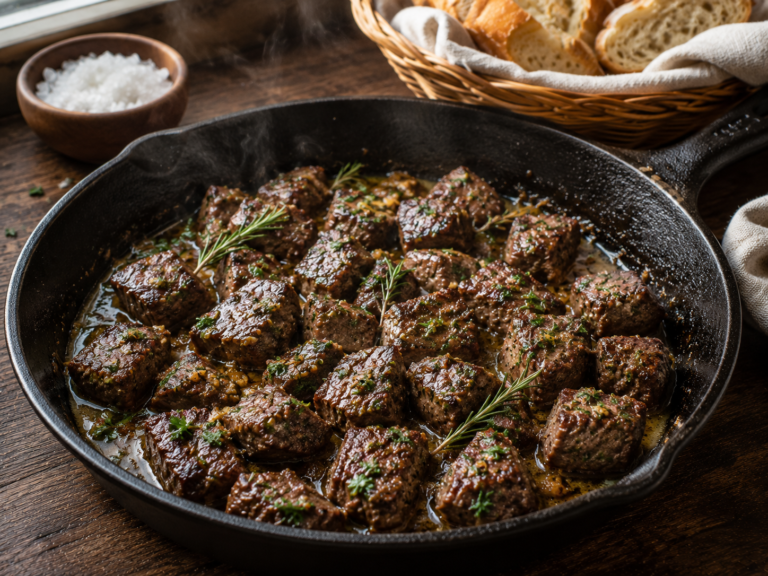
- A different night’s dinner idea: Want a 15-minute skillet dinner instead tonight? Check out our famous Garlic Butter Steak Bites.
Storage, Reheating & Freezing Instructions
- Fridge: Store leftover classic meatloaf in an airtight container for up to 4 days.
- Legendary leftover sandwiches: Slice cold meatloaf thin and layer it onto bread with extra ketchup or mayo for one of the best next-day lunches around.
- Reheating: Warm slices gently in a covered skillet over low heat, or in the oven at 300°F, to avoid drying out the meat.
- Freezing raw: Shape the loaf, wrap tightly, and freeze unbaked for up to 3 months; thaw fully in the fridge before baking as directed.
- Freezing baked: Cooked and cooled classic meatloaf freezes well too, wrapped tightly, for up to 3 months; reheat low and slow from frozen or thawed.
Frequently Asked Questions (FAQ)
What ground beef ratio is best for classic meatloaf?
80/20 is ideal, since that fat content keeps the loaf juicy throughout the longer bake time compared to leaner blends.
Why is my classic meatloaf always dry?
The most common culprits are skipping the milk-soaked breadcrumb panade or overmixing the meat, both of which strip away moisture and tenderness.
What internal temperature should meatloaf reach?
It needs to hit a safe 160°F; for complete official guidance, see the USDA Safe Internal Temperatures for Ground Beef (160°F).
Can I make this easy meatloaf recipe ahead of time?
Yes — shape it and refrigerate unbaked for up to a day, or freeze it raw for longer storage, then bake straight from the fridge or thawed.
Should I bake classic meatloaf in a loaf pan or on a baking sheet?
A parchment-lined, rimmed baking sheet is far better, since it lets rendered fat drain away instead of trapping the loaf in its own grease.
you can check more recipes from here
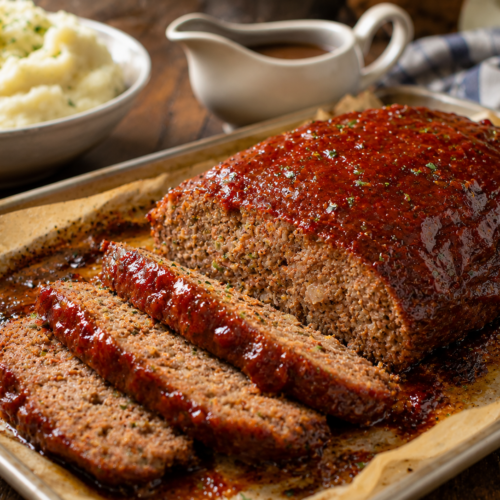
Easy Homemade Classic Meatloaf (Juicy & Tender)
Ingredients
Main Ingredients:
- 2 lbs ground beef 80/20
- 1 cup breadcrumbs or panko
- 1/2 cup whole milk
- 2 large eggs
- 1/2 cup minced yellow onion
- 3 cloves garlic minced
- 1 tbsp Worcestershire sauce
- 1 tsp Italian seasoning
- 1 tsp salt
- 1/2 tsp black pepper
Ingredients (Glaze):
- 1/2 cup ketchup
- 2 tbsp brown sugar
- 1 tbsp yellow mustard
- 1 tsp apple cider vinegar
Instructions
- Soak breadcrumbs in milk for a few minutes until fully absorbed.
- Add ground beef, eggs, onion, garlic, Worcestershire sauce, Italian seasoning, salt, and pepper, mixing gently just until combined.
- Shape the mixture into a freeform loaf on a parchment-lined, rimmed baking sheet.
- Bake at 350°F for 35-40 minutes before glazing.
- Whisk together ketchup, brown sugar, mustard, and apple cider vinegar, then brush generously over the loaf.
- Return to the oven for 15-20 minutes, until internal temperature reaches 160°F.
- Rest for 10 minutes before slicing and serving.
Notes
- Never overmix the ground beef; combine gently just until no streaks remain to keep the texture tender.
- Always rest the meatloaf for a full 10 minutes before slicing so the juices redistribute properly.
- Confirm doneness with a meat thermometer, targeting a safe internal temperature of 160°F.