
Orange Cake Recipe – Moist, Fresh & Easy to Make
This orange cake recipe is built to actually taste like fresh oranges, not just carry a faint citrus note buried under sugar. It’s a simple loaf cake, no layering or frosting technique involved, finished with a thin orange glaze that adds one more hit of citrus on top.

Orange Cake Recipe
Fresh orange zest and juice do most of the flavor work, while Greek yogurt and a neutral oil keep the crumb soft and moist rather than dry the way some citrus cakes can turn out. There’s no butter to cream here, which is part of what keeps the process simple and the texture consistently tender.
The finished loaf should be soft and moist all the way through, fully baked without drying out, with a glaze thin enough to drizzle and settle into a smooth, glossy layer rather than sitting thick on top. Getting real orange flavor into every bite comes down to one small technique more than any single ingredient: working the zest into the sugar before anything else goes into the bowl.
Why This Orange Cake Recipe Works

Most of the orange flavor in this cake starts before the batter is even mixed. Rubbing the zest into the sugar with your fingertips releases the citrus oils trapped in the zest, and that fragrant, orange-scented sugar is what carries flavor through the whole cake rather than leaving pockets of zest that taste stronger in some bites than others.
Greek yogurt and neutral oil are doing the texture work that butter would usually handle in a citrus cake. Yogurt adds moisture and a slight tang that keeps the sweetness from tasting flat, while the oil keeps the crumb tender and soft even after the cake has cooled completely — a butter-based batter can firm up more as it cools, while an oil-based one like this tends to stay softer longer.
How Fresh Orange Juice and Zest Add Flavor
Zest and juice bring different things to the cake. The zest holds the concentrated orange oils and gives the batter its aromatic backbone, while the juice adds brightness and a bit of acidity that keeps the cake from tasting one-dimensionally sweet. Using both, rather than relying on juice alone, is why this cake tastes distinctly of orange instead of just “citrus-adjacent.”
The same logic carries into the glaze, which uses more fresh zest and juice rather than a separate flavoring. It’s a small amount of glaze, but because it sits directly on top of each slice, even a little goes a long way toward reinforcing the orange flavor in the first bite.
What You’ll Need
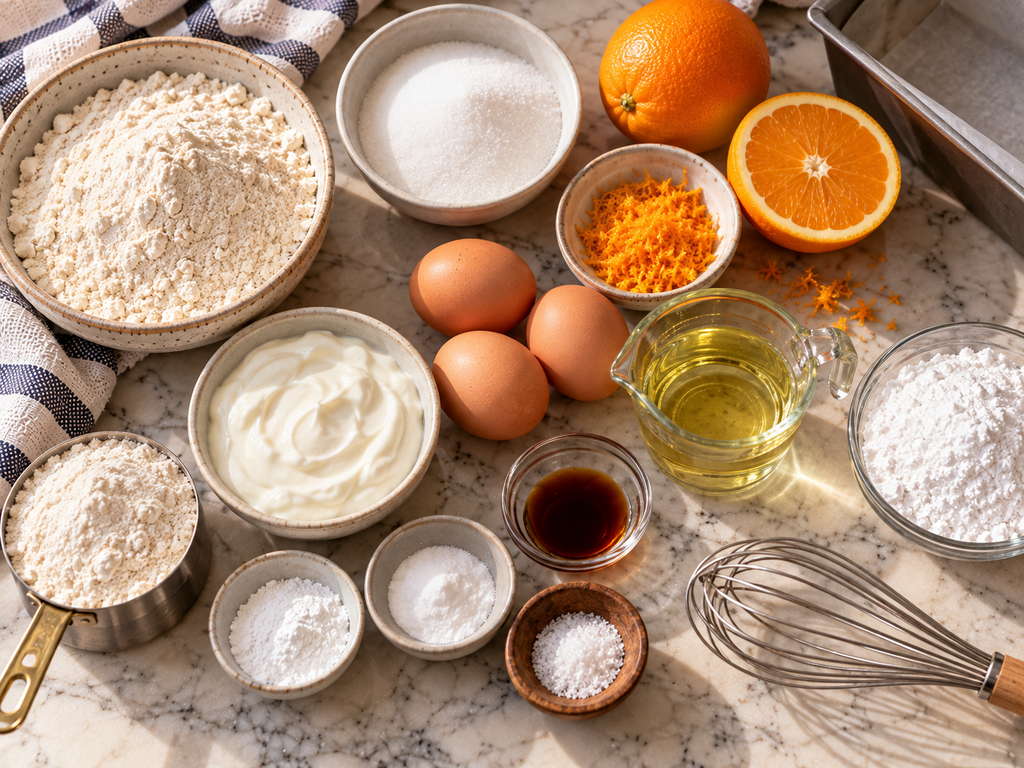
For the cake
- 1 3/4 cups (210 g) all-purpose flour
- 1 1/2 teaspoons baking powder
- 1/2 teaspoon baking soda
- 1/2 teaspoon fine salt
- 1 cup (200 g) granulated sugar
- 1 tablespoon finely grated orange zest
- 2 large eggs, room temperature
- 1/2 cup (120 g) plain Greek yogurt
- 1/2 cup (120 ml) neutral oil, such as canola or vegetable oil
- 1/2 cup (120 ml) fresh orange juice
- 1 teaspoon vanilla extract
For the orange glaze
- 1 cup (120 g) powdered sugar
- 2 tablespoons fresh orange juice
- 1 teaspoon finely grated orange zest
Equipment: 9 x 5-inch loaf pan, parchment paper, large mixing bowl, medium bowl, whisk, rubber spatula, citrus zester, measuring cups and spoons, wire cooling rack.
A few notes on ingredients:
- Oranges: You’ll need both zest and juice from fresh oranges for the cake, plus more for the glaze — a couple of medium oranges should cover it. Zest before you juice, since a whole orange is much easier to zest than one that’s already been cut.
- Eggs and yogurt: Bring both to room temperature before starting. Cold ingredients added to the orange-scented sugar don’t blend in as smoothly and can leave the batter looking uneven.
- Neutral oil: Canola or vegetable oil is what keeps this cake tender without adding a competing flavor. Something more assertive, like a strongly flavored olive oil, would work against the orange rather than with it.
How to Make Orange Cake Recipe
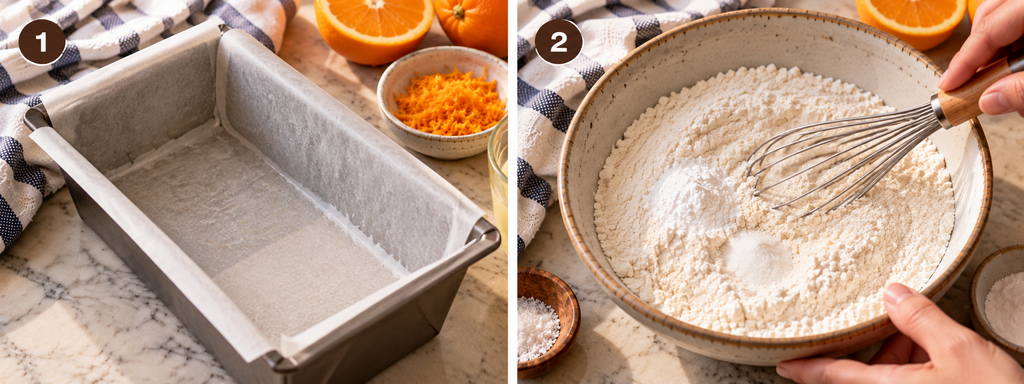
Step 1: Prepare the pan and oven
Preheat the oven to 350°F. Grease a 9 x 5-inch loaf pan and line it with parchment paper, leaving some overhang for easy removal.
Step 2: Combine the dry ingredients
Whisk together the flour, baking powder, baking soda, and salt in a medium bowl.
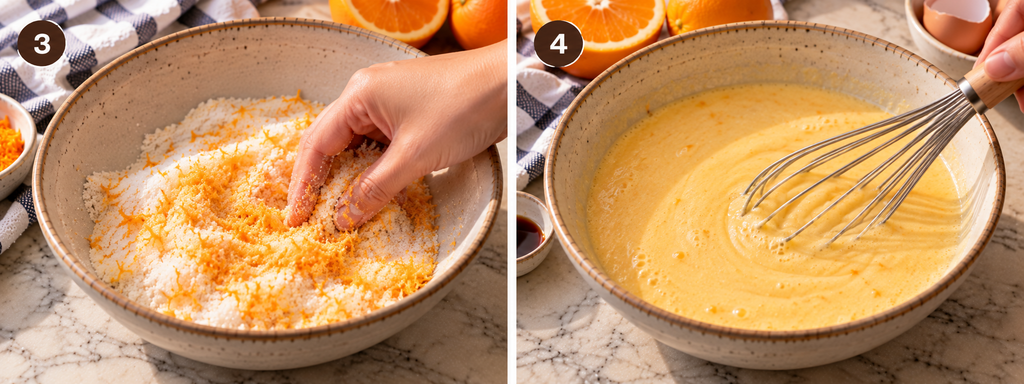
Step 3: Infuse the sugar with orange zest
In a large bowl, combine the sugar and orange zest. Rub them together with your fingertips for about 30 seconds until the sugar smells strongly of orange.
Step 4: Mix the wet ingredients
Whisk the eggs, Greek yogurt, oil, orange juice, and vanilla into the orange-scented sugar until the mixture is smooth.
Step 5: Make the batter
Add the dry ingredients to the wet mixture. Fold gently with a rubber spatula just until no dry streaks remain. Do not overmix.
Step 6: Fill and bake
Pour the batter into the prepared loaf pan and smooth the top. Bake at 350°F for 48 to 55 minutes, or until the top is golden and a toothpick inserted into the center comes out clean or with a few moist crumbs.
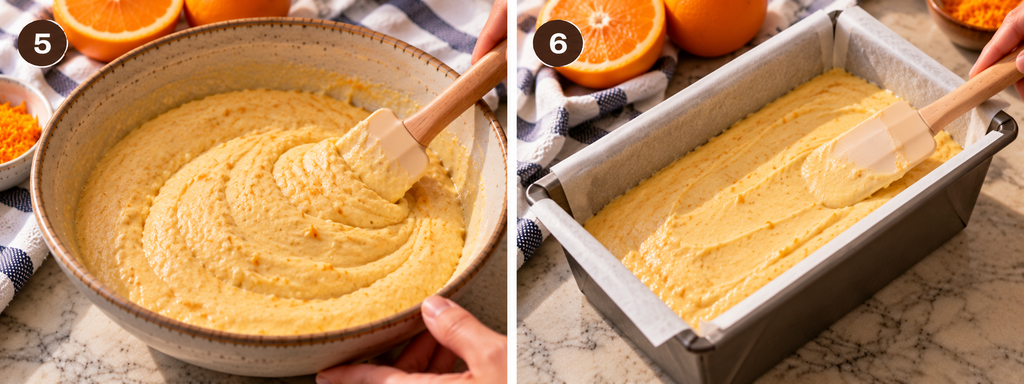
Step 7: Cool the cake
Let the cake cool in the pan for 10 minutes. Use the parchment overhang to lift it onto a wire rack and cool completely before glazing.
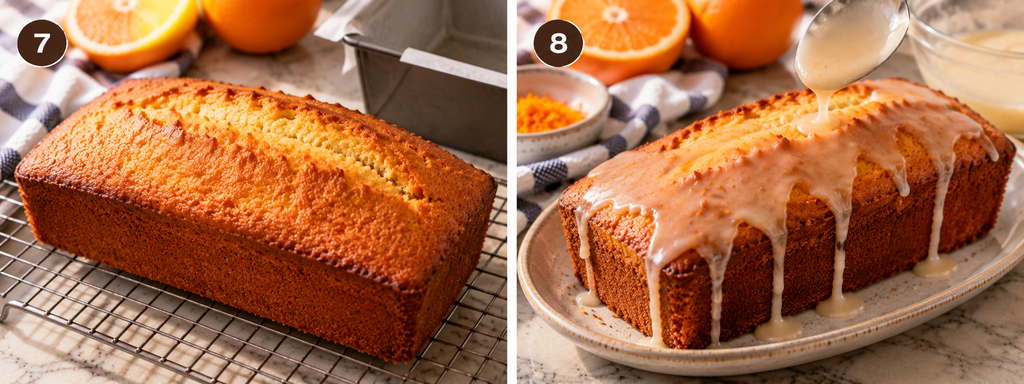
Step 8: Make and add the orange glaze
Whisk the powdered sugar, orange juice, and orange zest until smooth. Drizzle the glaze over the completely cooled cake and let it sit for about 10 minutes before slicing.
Tips for a Moist Orange Cake
- Rub the zest into the sugar for the full 30 seconds. It should smell noticeably orange before you move on — that’s the sign the oils have actually released into the sugar rather than just sitting on top of it.
- Stop folding as soon as the streaks disappear. Overmixing once the flour goes in is one of the fastest ways to turn a tender crumb into a tougher one.
- Judge doneness by the toothpick, not the clock alone. A toothpick that comes out clean or with just a few moist crumbs means it’s ready; wet batter clinging to it means it needs more time. Start checking a few minutes before the 48-minute mark.
- Let the cake cool completely before glazing. A warm cake will melt the glaze and let it soak in unevenly instead of setting into a smooth, glossy layer on top.
Common Mistakes to Avoid
- Zesting into the bitter white pith. Only the colored outer layer of the peel has the citrus oils you want — go past it into the white pith underneath and the zest picks up a bitter edge instead of a clean orange flavor.
- Skipping the zest-and-sugar step. Adding zest straight into the wet ingredients without rubbing it into the sugar first means less of its flavor actually makes it into the cake.
- Scooping flour straight from the bag. This tends to pack the flour down and pull in more than the recipe calls for, which can leave the cake denser than it should be. Spooning it into the measuring cup and leveling it off gives a more accurate amount.
- Starting with an orange that isn’t very juicy. A dried-out or old orange gives up less zest oil and less juice, which shows up as a milder orange flavor in the finished cake even when the measurements are exactly right.
Serving Suggestions
Slice this cake once the glaze has had its 10 minutes to set. It’s good on its own with coffee or tea, and needs nothing else added — the glaze provides enough sweetness and citrus punch that toppings would mostly get in the way.
Storage
Once the glaze has set, store the cake covered at room temperature for a few days. For longer storage, wrap it well and refrigerate; if you want to freeze it, it’s best to freeze the cake unglazed and add the glaze fresh after thawing, since a frozen and thawed glaze doesn’t always hold its texture as well.
Frequently Asked Questions

Can I glaze the cake while it’s still warm?
It’s better to wait until the cake is completely cool. A warm cake will melt the glaze on contact, so instead of setting into a smooth, glossy layer, it soaks in unevenly and mostly disappears into the crumb.
Why did my orange cake turn out dense or dry?
Dense usually comes from overmixing the batter once the flour is added, which develops more gluten than the cake needs. Dry usually means it stayed in the oven a little too long — checking with a toothpick a few minutes before the 48-minute mark, rather than waiting for the full 55, helps avoid that.
Can I use bottled orange juice instead of fresh?
You can, but the flavor won’t be as vibrant. Fresh juice carries brighter, more distinct orange flavor than most bottled varieties, and since this cake is built around real orange taste, fresh juice makes a noticeable difference here.
Can I make this cake ahead of time?
Yes. It’s a good candidate for baking a day ahead, since the flavor holds up well once cooled and wrapped. If you’re making it in advance, consider holding off on the glaze until closer to serving so it looks and tastes freshest.
you can check more recipes from here

Orange Cake Recipe – Moist, Fresh & Easy to Make
Ingredients
For the Cake
- 1 3/4 cups all-purpose flour 210g
- 1 1/2 teaspoons baking powder
- 1/2 teaspoon baking soda
- 1/2 teaspoon fine salt
- 1 cup granulated sugar 200g
- 1 tablespoon finely grated orange zest
- 2 large eggs room temperature
- 1/2 cup plain Greek yogurt 120g
- 1/2 cup neutral oil such as canola or vegetable oil 120ml
- 1/2 cup fresh orange juice 120ml
- 1 teaspoon vanilla extract
For the Orange Glaze
- 1 cup powdered sugar 120g
- 2 tablespoons fresh orange juice
- 1 teaspoon finely grated orange zest
Instructions
- Preheat the oven to 350°F. Grease a 9 x 5-inch loaf pan and line it with parchment paper, leaving some overhang for easy removal.
- Whisk together the flour, baking powder, baking soda, and salt in a medium bowl.
- In a large bowl, combine the granulated sugar and orange zest. Rub them together with your fingertips for about 30 seconds until the sugar smells strongly of orange.
- Whisk the eggs, Greek yogurt, oil, orange juice, and vanilla into the orange-scented sugar until smooth.
- Add the dry ingredients and gently fold with a rubber spatula just until no dry streaks remain. Do not overmix.
- Pour the batter into the prepared loaf pan and smooth the top. Bake for 48–55 minutes, or until golden and a toothpick inserted into the center comes out clean or with a few moist crumbs.
- Let the cake cool in the pan for 10 minutes. Use the parchment overhang to lift it onto a wire rack and cool completely.
- Whisk the powdered sugar, orange juice, and orange zest until smooth. Drizzle over the cooled cake and let the glaze sit for about 10 minutes before slicing.
Notes
- Fresh orange zest provides much of the cake’s strongest citrus aroma, so use freshly grated zest rather than bottled flavoring. Avoid overmixing once the flour is added, and let the cake cool completely before glazing so the glaze stays visible on top instead of melting into the cake.