Caramel Cake Recipe – Moist Southern-Style Layer Cake
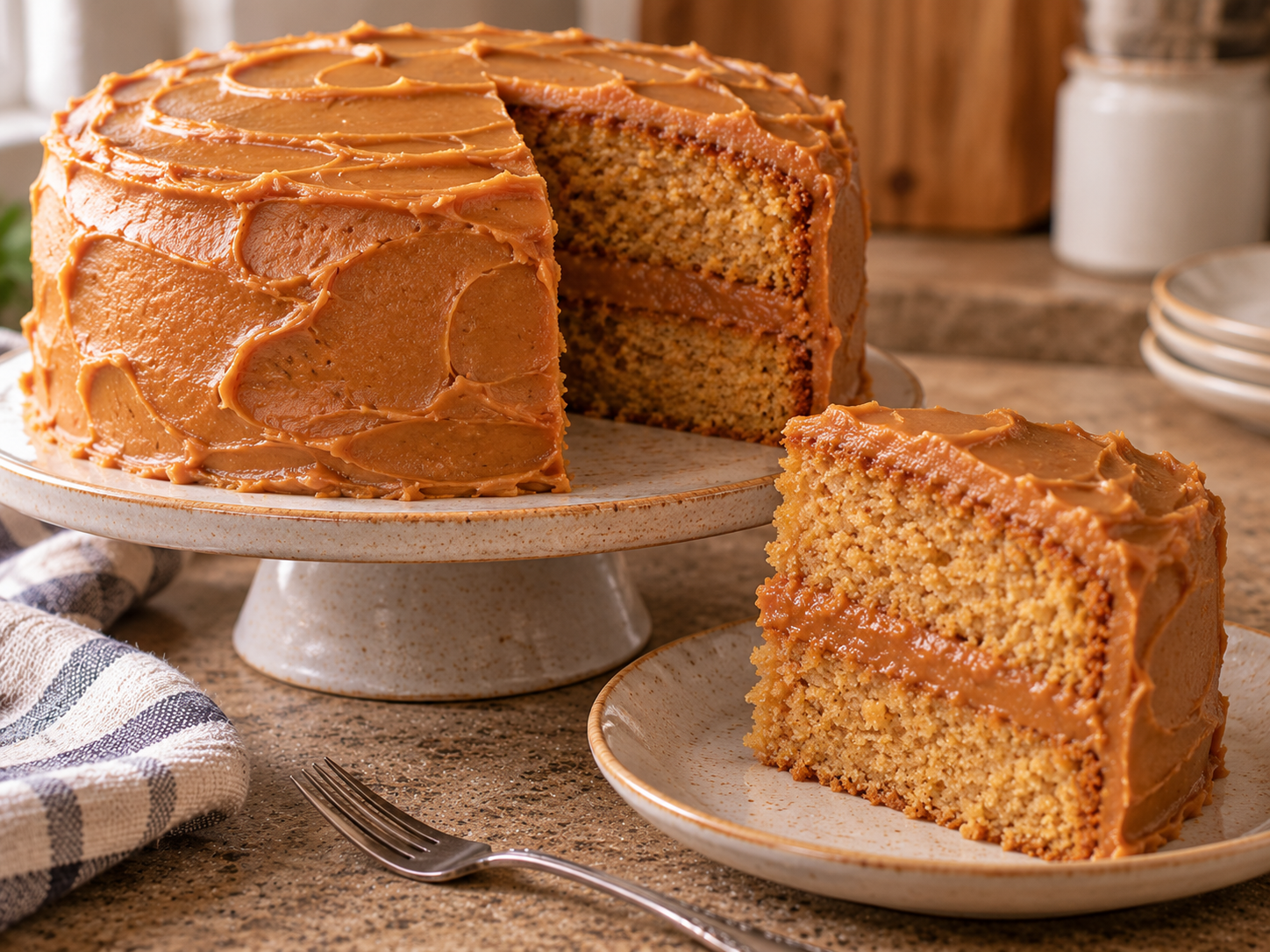
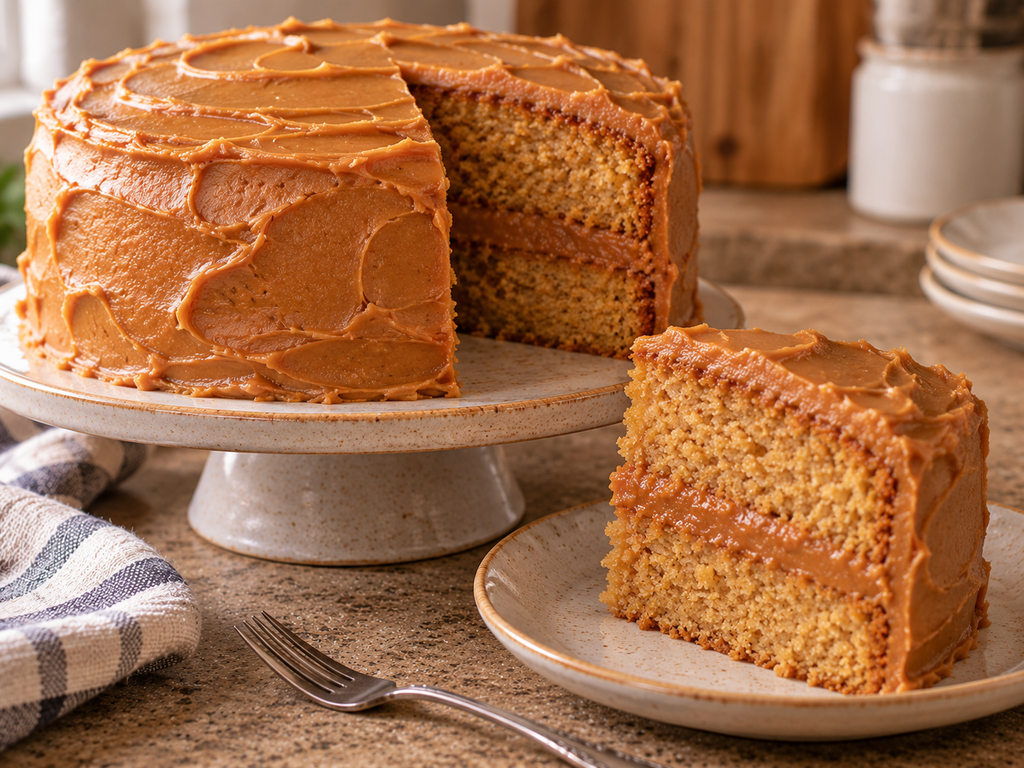
This caramel cake recipe is the Southern-style version people usually mean when they ask for one: soft brown-sugar cake layers under a rich, cooked caramel frosting. It’s a two-layer cake, made in two 9-inch round pans, with no fondant or piping work involved — just cake, frosting, and a proper stack.
Caramel Cake Recipe
The cake layers get their flavor from brown sugar and vanilla, with buttermilk keeping the crumb tender rather than dense. The frosting is where the real work happens: butter, brown sugar, and cream are cooked together into a caramel base, then finished with powdered sugar to turn it into something you can actually spread.
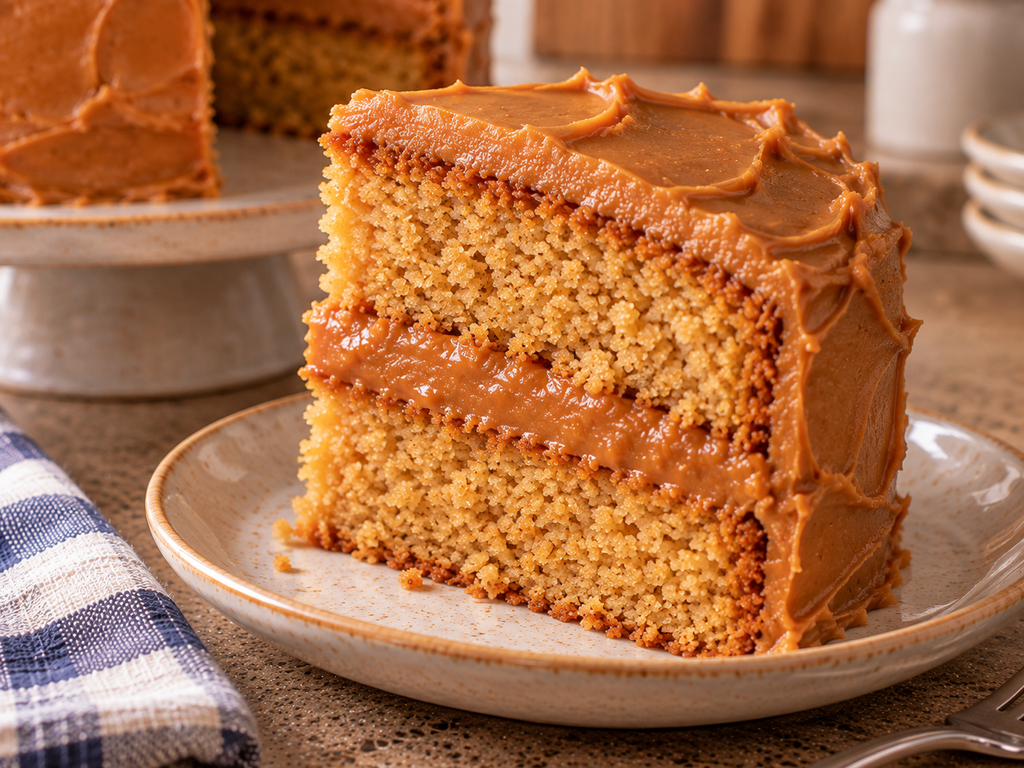
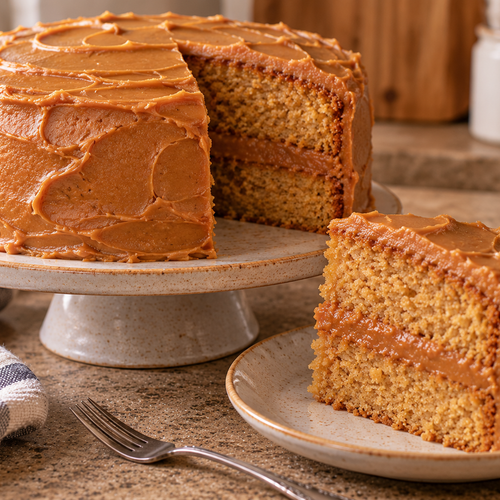
Once assembled, the cake should hold together cleanly when sliced, with two distinct layers visible and caramel frosting running between them and over the top and sides. The frosting firms slightly as it sits but stays soft enough that it doesn’t crack or crumble when you cut into it.
What Makes This Caramel Cake Work
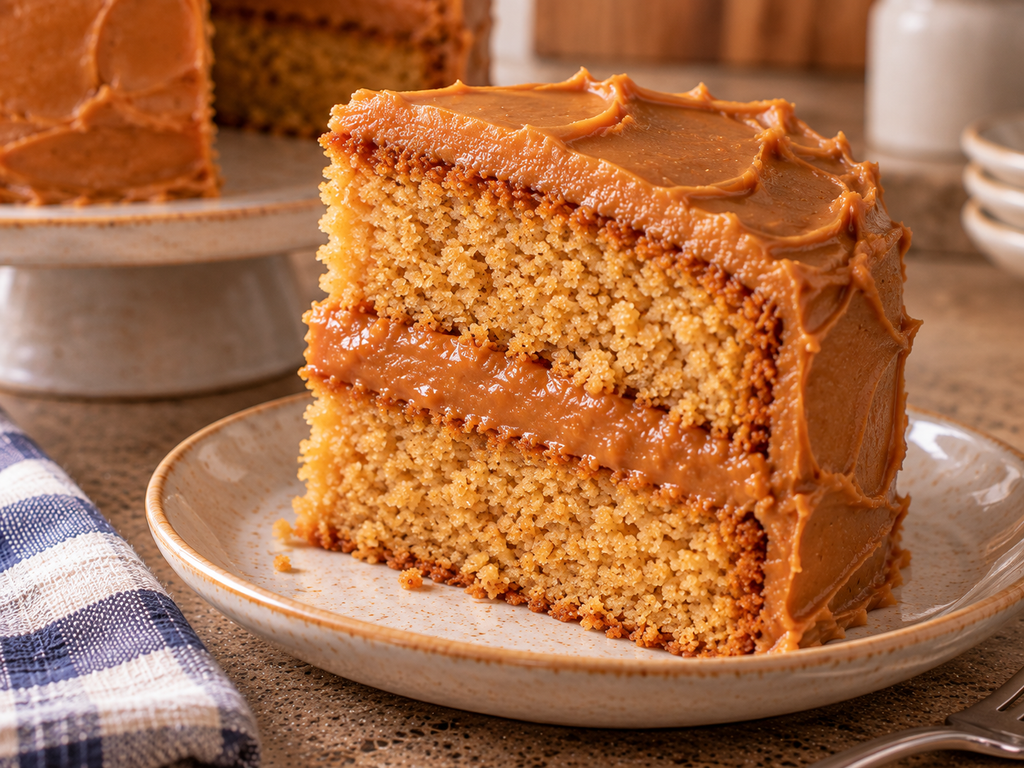
Brown sugar in the batter does double duty — it sweetens the cake and gives it a light caramel note before the frosting even goes on, so the whole cake reads as caramel rather than just a plain cake with caramel on top. Buttermilk is what keeps the crumb from turning dense; it adds moisture and a slight tang that balances the sweetness of the batter and the frosting both.
The frosting itself is a cooked caramel — butter, brown sugar, and cream simmered together until the sugar fully dissolves — but it doesn’t stop there. Traditional cooked caramel icings have a reputation for being hard to work with: they can set up fast, crack, or turn grainy if you’re not moving quickly enough. Beating sifted powdered sugar into the cooled caramel base solves that problem. It thickens the frosting into something smooth and genuinely spreadable, with much more room for error than a caramel icing that depends entirely on hitting an exact cooking temperature.
Ingredients You’ll Need
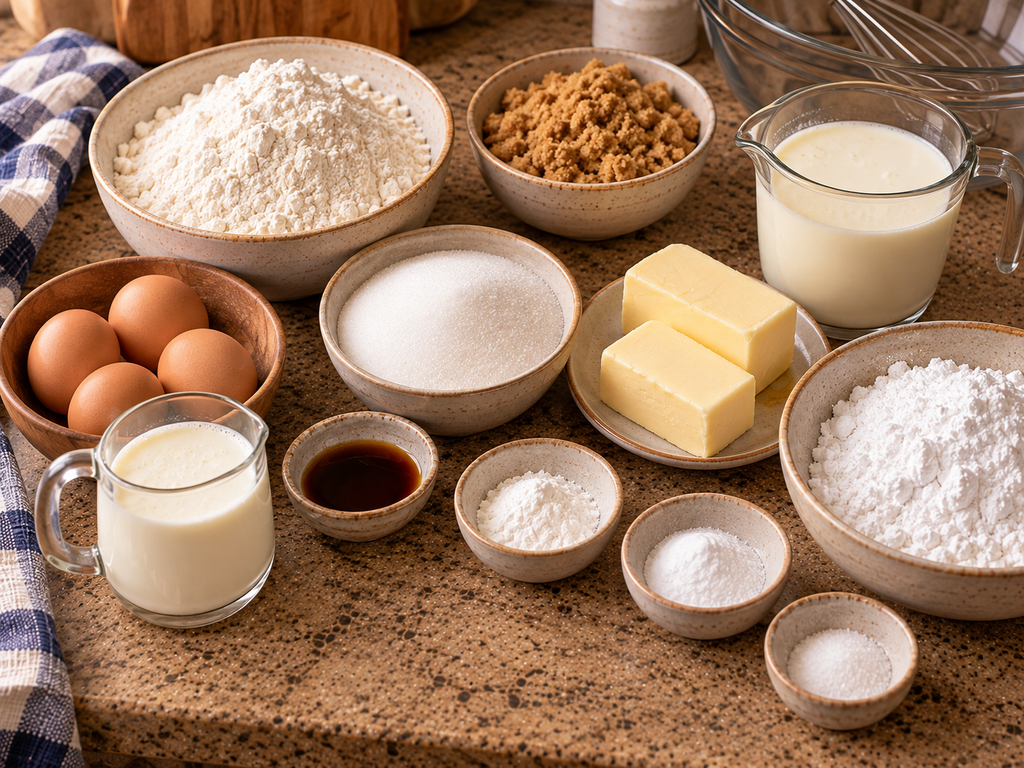
For the cake
- 1 1/2 cups (300 g) packed light brown sugar
- 1/2 cup (100 g) granulated sugar
- 3/4 cup (170 g) unsalted butter, softened
- 3 large eggs, room temperature
- 2 teaspoons vanilla extract
- 2 1/2 cups (300 g) all-purpose flour
- 2 teaspoons baking powder
- 1/2 teaspoon baking soda
- 1/2 teaspoon fine salt
- 1 cup (240 ml) buttermilk, room temperature
For the caramel frosting
- 1 cup (226 g) unsalted butter
- 2 cups (400 g) packed light brown sugar
- 1/2 cup (120 ml) heavy cream
- 1/2 teaspoon fine salt
- 2 teaspoons vanilla extract
- 2 cups (240 g) powdered sugar, sifted
A few notes on ingredients:
- Butter: Make sure the butter for the cake batter is genuinely softened, not melted — it needs to hold air when creamed with the sugars for the crumb to turn out light rather than dense.
- Buttermilk and eggs: Bring both to room temperature before starting. Cold buttermilk added to creamed butter can cause the batter to look curdled and uneven.
- Powdered sugar: Sift it before adding it to the caramel base. Unsifted powdered sugar tends to leave small lumps that don’t fully dissolve into a warm caramel mixture.
How to Make Caramel Cake
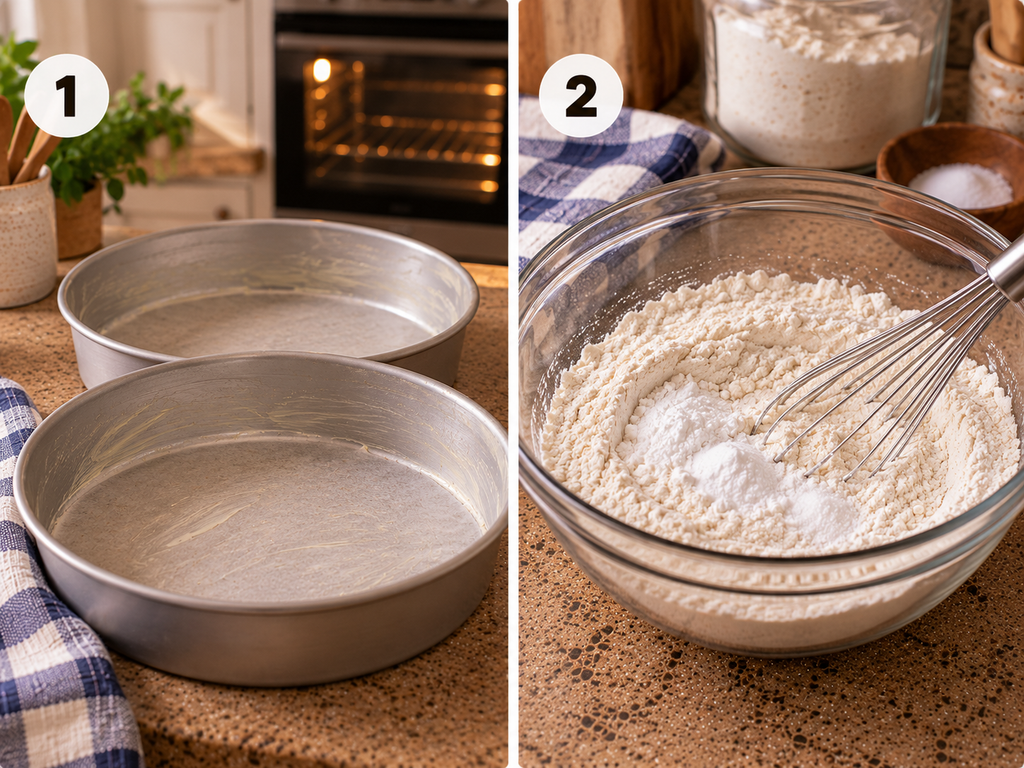
Step 1: Prepare the pans and oven
Preheat the oven to 350°F. Grease two 9-inch round cake pans, line the bottoms with parchment, and lightly grease the parchment.
Step 2: Mix the dry ingredients
Whisk together the flour, baking powder, baking soda, and salt.
Step 3: Build the cake batter
Beat the softened butter, brown sugar, and granulated sugar until light and fluffy. Add the eggs one at a time, then mix in the vanilla. Add the dry ingredients in portions, alternating with the buttermilk, beginning and ending with the dry ingredients. Mix only until combined.
Step 4: Bake and cool the cake layers
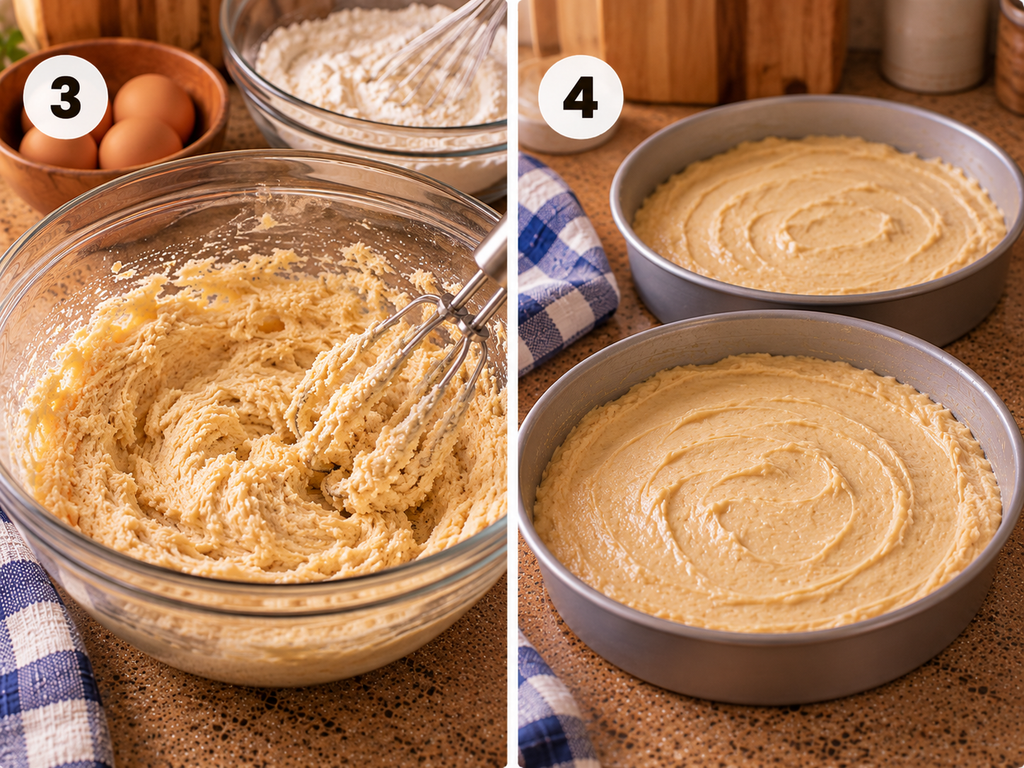
Divide the batter evenly between the prepared pans and smooth the tops. Bake at 350°F for 25 to 30 minutes, until the tops spring back lightly and a toothpick inserted in the center comes out clean. Cool in the pans for 10 to 15 minutes, then transfer to a rack and cool completely.
Step 5: Make the caramel frosting
Melt the butter in a saucepan over medium heat. Add the brown sugar, heavy cream, and salt. Bring the mixture to a gentle simmer, stirring until the sugar dissolves completely. Continue cooking for about 3 to 4 minutes, stirring frequently. Remove from the heat and stir in the vanilla. Transfer to a mixing bowl and let it cool until warm rather than hot.
Step 6: Finish the frosting
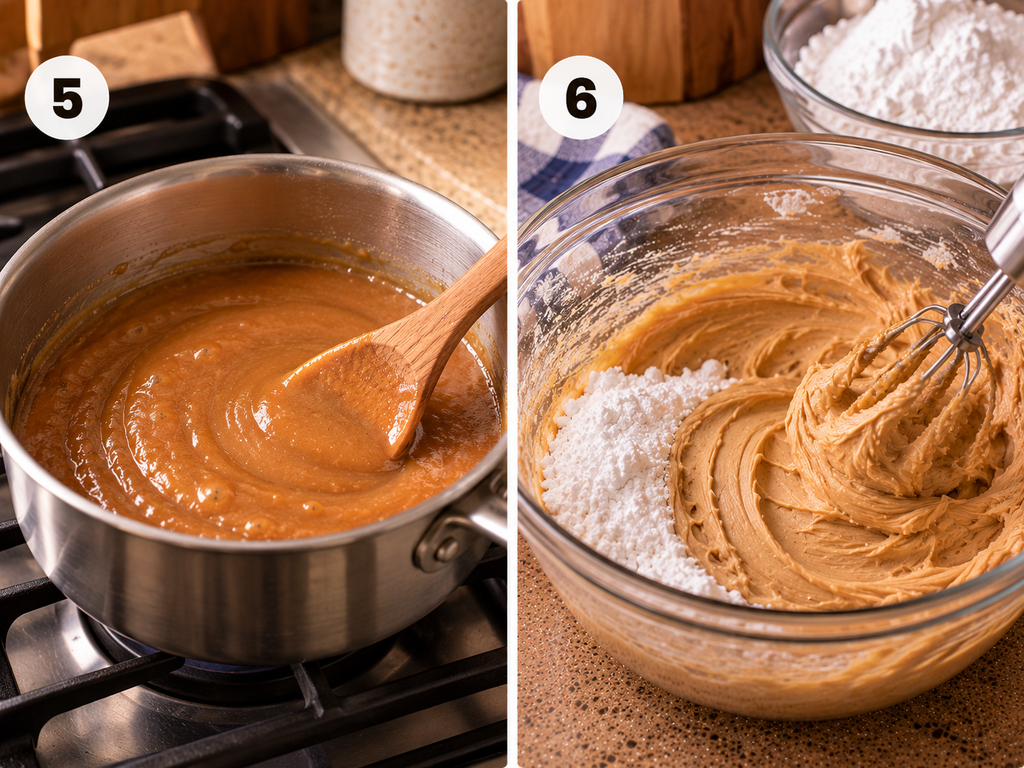
Gradually beat the sifted powdered sugar into the warm caramel mixture until smooth and spreadable. If the frosting becomes too firm, let it stand briefly in a warm place and stir before using.
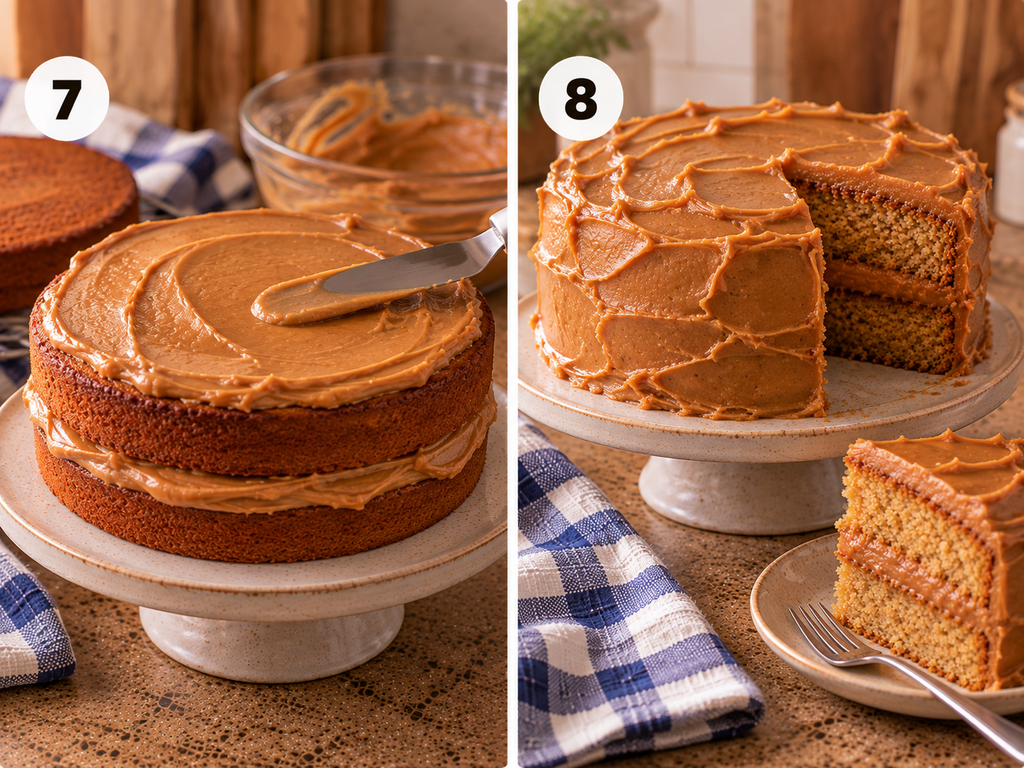
Step 7: Assemble the cake
Place one completely cooled cake layer on a serving plate. Spread a layer of caramel frosting over the top. Place the second cake layer on top and cover the top and sides with the remaining frosting, working while it is still spreadable.
Step 8: Let the cake set
Allow the assembled cake to stand at room temperature for about 15 to 20 minutes so the frosting can firm slightly before slicing.
Tips for Success
- Make sure the layers are completely cool before frosting. Warm cake will melt the frosting on contact, making it slide instead of spread.
- Don’t rush the alternating mixing step. Adding the flour and buttermilk in stages, starting and ending with the dry ingredients, keeps the batter from curdling or overmixing in one direction.
- Watch the caramel base closely once it simmers. Three to four minutes is usually enough to build real caramel flavor without pushing the sugar past the point of dissolving cleanly.
- Have both cake layers cooled and the serving plate ready before you finish the frosting. Since the frosting is easiest to spread while still warm, doing your setup ahead of time means less standing around while it cools and firms up on you.
Serving and Storage
Slice and serve once the frosting has had its 15 to 20 minutes to set. Because the frosting is butter- and cream-based, the cake keeps best covered at room temperature for a few days; for anything longer, refrigerate it and let slices come back toward room temperature before serving so the frosting isn’t stiff.
Frequently Asked Questions
What do I do if the caramel frosting sets too firm before I finish frosting the cake?
Set the bowl in a warm spot for a few minutes, then stir it before continuing. The frosting firms as it cools, so a brief rewarm brings it back to a spreadable texture without needing to remake it.
Can I bake the cake layers ahead of time?
Yes. Bake and cool the layers completely, then wrap them well and keep them at room temperature for a day, or refrigerate them for longer, before frosting.
Why does this caramel frosting include powdered sugar instead of just cooked caramel?
The cooked butter, brown sugar, and cream mixture is the caramel base, but on its own it can set up quickly and become hard to spread evenly. Beating in sifted powdered sugar once the base has cooled to warm turns it into a smooth, controllable frosting that’s easier to work with than a caramel icing relying on precise cooking temperatures alone.
you can check more recipes from here
Caramel Cake Recipe – Moist Southern-Style Layer Cake
Ingredients
Cake
- 1 1/2 cups 300g packed light brown sugar
- 1/2 cup 100g granulated sugar
- 3/4 cup 170g unsalted butter, softened
- 3 large eggs room temperature
- 2 teaspoons vanilla extract
- 2 1/2 cups 300g all-purpose flour
- 2 teaspoons baking powder
- 1/2 teaspoon baking soda
- 1/2 teaspoon fine salt
- 1 cup 240ml buttermilk, room temperature
Caramel Frosting
- 1 cup 226g unsalted butter
- 2 cups 400g packed light brown sugar
- 1/2 cup 120ml heavy cream
- 1/2 teaspoon fine salt
- 2 teaspoons vanilla extract
- 2 cups 240g powdered sugar, sifted
Instructions
- Preheat the oven to 350°F.
- Grease two 9-inch round cake pans.
- Line the bottoms with parchment rounds and lightly grease the parchment.
- Whisk together the flour, baking powder, baking soda, and salt.
- Beat the softened butter, brown sugar, and granulated sugar until light and fluffy.
- Add the eggs one at a time, beating after each addition.
- Mix in the vanilla.
- Add the dry ingredients in portions, alternating with the buttermilk, beginning and ending with the dry ingredients.
- Mix only until the batter is combined.
- Divide the batter evenly between the prepared pans and smooth the tops.
- Bake at 350°F for 25–30 minutes, until the tops spring back lightly and a toothpick inserted in the center comes out clean.
- Cool the cakes in the pans for 10–15 minutes.
- Transfer the cake layers to a wire rack and cool completely.
- Melt the butter for the frosting in a saucepan over medium heat.
- Add the brown sugar, heavy cream, and salt.
- Bring the mixture to a gentle simmer, stirring until the sugar has completely dissolved.
- Continue cooking for about 3–4 minutes, stirring frequently.
- Remove from the heat and stir in the vanilla.
- Transfer the caramel mixture to a mixing bowl and let it cool until warm rather than hot.
- Gradually beat in the sifted powdered sugar until the frosting is smooth and spreadable.
- Place one cooled cake layer on a serving plate.
- Spread caramel frosting over the top.
- Place the second cake layer on top.
- Cover the top and sides with the remaining caramel frosting while it is still spreadable.
- Let the finished cake stand at room temperature for 15–20 minutes before slicing.
Notes
- The caramel frosting is easiest to spread while it is still slightly warm. If it becomes too firm, let it stand somewhere warm briefly and stir it before continuing.